What does bugger mean? The word bugger is a British slang term that can have several meanings depending on the situation. Most commonly, it’s used to describe an annoying person, express frustration, or jokingly refer to someone as lucky or mischievous. While many people in the UK, Australia, and New Zealand use it casually, others still consider it a mild swear word, so context matters.
The meaning of bugger isn’t always obvious because its tone can change from friendly and humorous to rude or offensive. You might hear it in everyday conversations, TV shows, movies, text messages, or social media posts, and its meaning often depends on who’s saying it and where it’s being used. Understanding the definition of bugger, its slang usage, and when it’s appropriate can help you avoid misunderstandings and use the term correctly. Keep reading to discover its different meanings, real-life examples, common phrases, and the situations where you should—and shouldn’t—use this word.
What Does Bugger Mean (Quick Meaning)
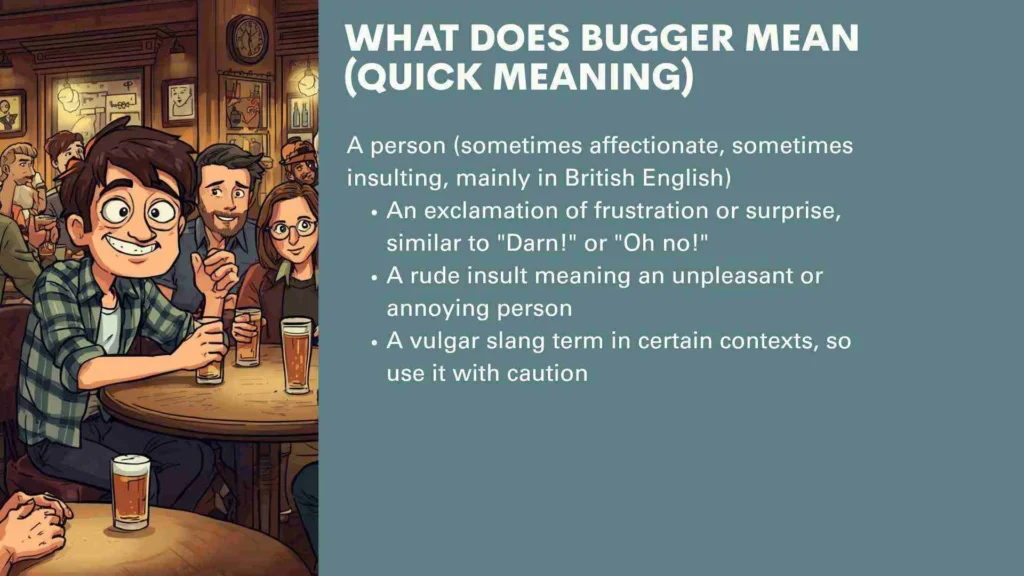
- A person (sometimes affectionate, sometimes insulting, mainly in British English)
- An exclamation of frustration or surprise, similar to “Darn!” or “Oh no!”
- A rude insult meaning an unpleasant or annoying person
- A vulgar slang term in certain contexts, so use it with caution
Quick Answer: The meaning of bugger depends on context. In modern British English, it most commonly means an annoying person or is used as a mild swear word expressing frustration.
What Does Bugger Mean?
The definition of bugger changes depending on how it’s used.
Most commonly, it can mean:
- Someone who is annoying
- A mischievous person
- An expression of annoyance
- A mild swear word in British English
Although the word has an older vulgar origin, many modern speakers—especially in the UK, Australia, and New Zealand—use it casually without intending its original meaning.
Full Meaning in Simple Words
In everyday English, bugger usually means:
- “That annoying guy.”
- “Oh no!”
- “What bad luck!”
- “Someone acting badly.”
The tone can range from friendly teasing to genuine anger.
For example:
- “You lucky bugger!” (playful)
- “Poor bugger.” (sympathetic)
- “Bugger!” (frustration)
What Does Bugger Mean in Text?
In text messages, bugger is usually used as a casual expression rather than a serious insult.
Example
Alex: “I forgot my wallet.”
Sam: “Bugger! That really sucks.”
Meaning: “Oh no!”
Another example:
Friend: “You won free tickets?”
You: “Lucky bugger!”
Meaning: “You’re very lucky.”
What Does Bugger Mean on Social Media (TikTok, Instagram, etc.)?
On platforms like TikTok, Instagram, Facebook, Reddit, and X, bugger usually appears in casual British or Australian English.
People often use it to:
- Express disappointment
- Joke with friends
- Describe someone playfully
- React to bad luck
WhatsApp Chat Example
Tom: “I missed the train.”
Ben: “Bugger! Hope the next one isn’t late.”
Instagram DM Example
“You lucky bugger! That vacation looks amazing.”
Meaning: You’re extremely lucky.
TikTok Comment Example
“Poor bugger didn’t even see it coming 😂”
Meaning: Poor guy.
Real-Life Meaning and Usage
You’ll most often hear bugger in:
- Britain
- Australia
- New Zealand
- Ireland
In the United States, the word is much less common, and many Americans may not use it regularly.
Examples include:
- Friendly jokes
- Sports conversations
- Everyday complaints
- Casual conversations
Real-Life Situations Where This Term Is Used
After Making a Mistake
“Bugger! I left my keys at home.”
Talking About a Friend
“You lucky bugger.”
Showing Sympathy
“Poor bugger lost his job.”
Describing Someone Annoying
“That little bugger keeps stealing my socks.”
Examples of Bugger in Sentences
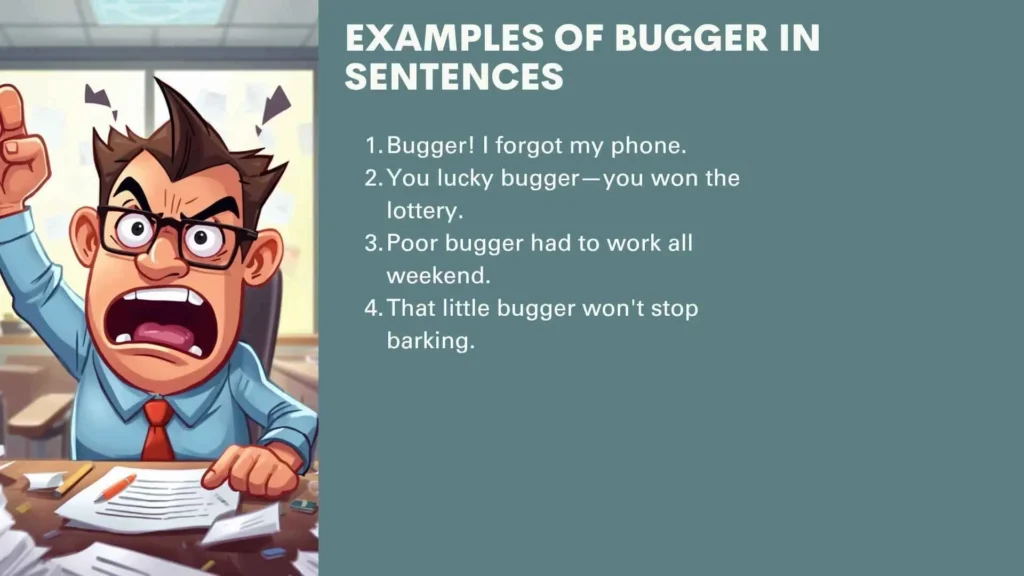
- Bugger! I forgot my phone.
- You lucky bugger—you won the lottery.
- Poor bugger had to work all weekend.
- That little bugger won’t stop barking.
- The old bugger still beats everyone at chess.
- We were completely buggered after the hike. (In British slang, “buggered” often means exhausted.)
Different Contexts of Bugger
Casual Conversation
Often humorous.
Example:
“You cheeky bugger.”
British English
Very common.
Can sound mild depending on the speaker.
Australian English
Often used informally among friends.
Online
Usually humorous or expressive.
Formal Writing
Avoid using it.
It isn’t appropriate for professional communication.
Origin and History of the Term
The word bugger comes from Middle English and originally had a highly offensive meaning connected to historical accusations against certain groups. Over time, especially in British English, its original meaning largely faded from everyday use.
Today, most speakers use it simply as:
- A mild swear word
- An expression of annoyance
- A playful nickname
- A casual insult
However, because of its history, some people still consider it vulgar.
Why Do People Use This Word?
People use bugger because it’s expressive and emotional.
Common reasons include:
- Showing frustration
- Teasing friends
- Expressing surprise
- Complaining
- Making conversations sound informal
Emotional & Psychological Meaning Behind This Word
Depending on tone, bugger can express:
- Frustration
- Affection
- Sympathy
- Humor
- Mild anger
For example:
- “Poor bugger.” → Compassion.
- “Lucky bugger!” → Friendly jealousy.
- “Bugger!” → Frustration.
Tone Explanation
Formal
❌ Not appropriate.
Informal
✅ Very common.
Slang
✅ Yes.
It is considered slang, especially in British English.
Rude
Sometimes.
It depends on the audience and country.
Is It Rude to Say This Word?
Sometimes.
In the UK, Australia, and New Zealand, many people consider bugger a relatively mild swear word.
In professional settings or around people you don’t know well, it’s better to avoid it because some may still find it offensive.
Is This Word Positive, Negative, or Neutral?
It can be all three.
Positive
“You lucky bugger!”
Neutral
“Poor bugger.”
Negative
“Bugger off!”
When to Use Bugger
You might hear or use it:
- Among close friends
- In casual conversation
- While joking
- Expressing frustration
- Talking informally
When NOT to Use Bugger
Avoid using it:
- At work
- During interviews
- In school assignments
- Around children
- With strangers
- In formal emails
Situations Where You Should Avoid Using This Word
Don’t use bugger when:
- Speaking professionally.
- Communicating with customers.
- Writing academic papers.
- Talking to people who may find profanity offensive.
- Speaking in multicultural settings where the term may be misunderstood.
Bugger vs Similar Terms
| Word | Meaning | Usage | Key Difference |
| Bugger | Mild slang insult or exclamation | Informal British English | Can be playful or rude |
| Jerk | Rude or annoying person | American English | More direct insult |
| Idiot | Foolish person | Everyday English | Stronger criticism |
| Darn | Mild exclamation | Family-friendly | Not directed at a person |
| Bloody | British intensifier | Informal | Adds emphasis rather than referring to someone |
Possible Meanings and Variations
Depending on context, bugger may mean:
- Annoying person
- Playful nickname
- Mild insult
- Expression of frustration
- Expression of surprise
- “Poor fellow” (poor bugger)
- “Lucky person” (lucky bugger)
- Exhausted (buggered)
- Broken or ruined (“It’s buggered.”)
- “Go away” in the phrase “bugger off”
How to Respond
Casual Replies
- “I know!”
- “Tell me about it.”
- “Haha, thanks!”
- “You’re right.”
Funny Replies
- “That’s me!”
- “I’ll take that as a compliment.”
- “Guilty as charged.”
Professional Replies
If someone uses bugger casually at work, it’s usually best not to repeat it. Instead, respond with neutral language such as:
- “That’s unfortunate.”
- “I understand.”
- “Let’s solve the problem.”
USA / Western Usage
In the United States, bugger is relatively uncommon. Many Americans recognize it as British slang, often from TV shows, movies, or books.
In the UK, Australia, and New Zealand, it’s much more common and is often used casually among friends, though it still counts as mild profanity.
Global or Internet Usage Differences
Online, bugger generally keeps the same meaning:
- Mild complaint
- Friendly teasing
- Casual insult
- Expression of surprise
Its tone depends heavily on the speaker’s country and relationship with the audience.
What Does Bugger Mean in Slang?
If you’re searching for what does bugger mean in slang, the answer is:
It is a British slang word that can mean:
- An annoying person
- A mischievous person
- A mild insult
- An expression like “Oh no!”
- A playful way to refer to someone
Frequently Asked Questions
What does bugger mean in British slang?
It usually refers to an annoying person, a playful nickname, or a mild swear word expressing frustration.
Is bugger a bad word?
It is generally considered mild profanity, especially in British English. Some people find it offensive, while others use it casually.
What does “poor bugger” mean?
It means “poor guy” or “poor person,” expressing sympathy.
What does “lucky bugger” mean?
It means someone is very lucky, usually in a friendly or joking way.
What does “bugger off” mean?
It is an informal and somewhat rude way of telling someone to “go away” or “leave me alone.”
What does buggered mean?
In British slang, buggered often means very tired, broken, ruined, or exhausted, depending on the context.
Is bugger common in the USA?
No. It’s mainly associated with British, Australian, and New Zealand English.
Conclusion
Understanding what bugger means helps you recognize one of the most common British slang words. Today, it is usually used as a mild swear word, a playful nickname, or an expression of frustration rather than its original historical meaning. While it’s often harmless among friends in the UK and similar regions, it’s still considered informal and can offend some people. If you’re speaking in a professional setting or with people you don’t know well, it’s usually best to choose a more neutral alternative.

James Parker is a passionate writer and language enthusiast dedicated to helping readers understand words, meanings, and communication in a simple and effective way. With years of experience in educational writing and vocabulary research, he creates easy-to-understand content that helps students, learners, and readers improve their language skills.
At MeanNings.com, James focuses on providing accurate word meanings, English vocabulary, synonyms, antonyms, and practical language guides. His writing style is clear, informative, and designed for readers of all levels.
James believes that learning language should be simple, engaging, and accessible to everyone. Through his work, he aims to make complex words easier to understand and help readers build confidence in communication.
Books by James Parker
- The Power of Words
- Mastering Everyday Vocabulary
- English Meanings Simplified
 Daniel Brooks