If you’re wondering what does tone mean, the simple answer is this: tone is the way something sounds, feels, or is expressed. It can describe a person’s voice, attitude, writing style, or even the overall mood of a conversation. The meaning depends on the context, but it always relates to how a message is delivered rather than just what is said.
Whether you’re reading a text message, writing an email, analyzing a novel, or listening to someone speak, understanding what does tone mean helps you better understand the speaker’s emotions and intentions.
Quick Meaning
Here are the most common meanings of tone:
- Voice tone: The sound or quality of someone’s voice (happy, angry, calm, excited).
- Writing tone: The attitude or feeling expressed through written words.
- Musical tone: A sound with a particular pitch and quality.
- General tone: The overall mood or atmosphere of a conversation, message, or situation.
The meaning of tone is the emotional quality, attitude, or style used to communicate a message.
What Does Tone Mean?
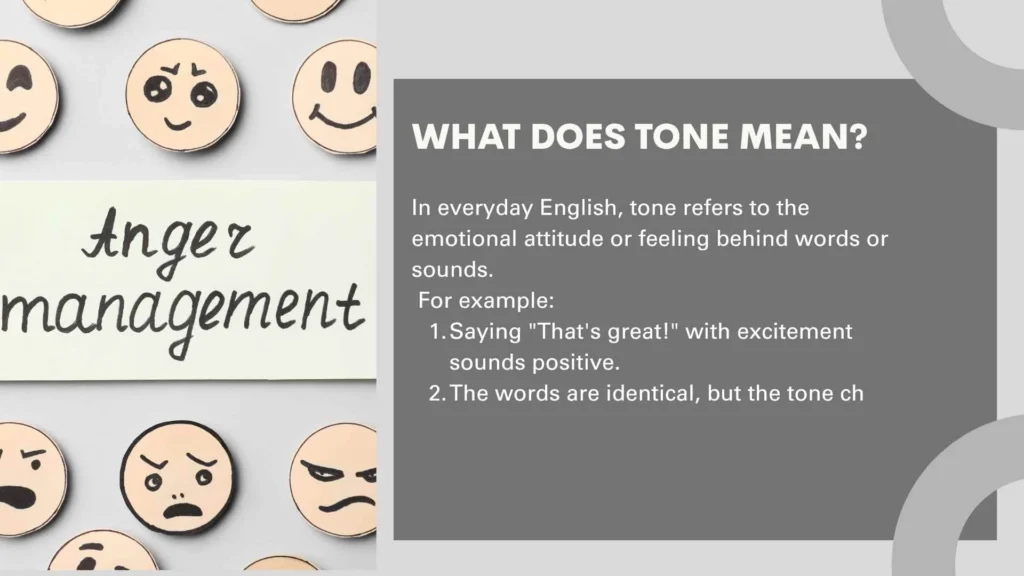
In everyday English, tone refers to the emotional attitude or feeling behind words or sounds.
For example:
- Saying “That’s great!” with excitement sounds positive.
- Saying “That’s great…” with a sigh may sound sarcastic.
The words are identical, but the tone changes the meaning completely.
Tone is important because people often judge how you feel based on how you communicate rather than what you actually say.
Full Meaning in Simple Words
In simple words, tone means the feeling or attitude behind a message.
Think of it like this:
- Words tell people your message.
- Tone tells people how you feel about that message.
A friendly tone makes people feel welcome.
A rude tone can create conflict.
A professional tone builds trust.
A humorous tone makes conversations more enjoyable.
Because tone affects how messages are understood, it’s one of the most important parts of communication.
What Does Tone Mean in Text?
When people ask what does tone mean in text, they’re talking about the emotion behind written messages.
Unlike face-to-face conversations, text messages don’t include facial expressions or voice, so readers often guess the tone.
Examples:
Text:
“Okay.”
Possible tones:
- Friendly
- Annoyed
- Passive-aggressive
- Neutral
Another example:
“Thanks!! 😊”
- Warm
- Happy
- Appreciative
Compared to:
“Thanks.”
- Neutral
- Short
- Possibly cold (depending on context)
This is why emojis, punctuation, and word choice matter in texting.
What Does Tone Mean on Social Media (TikTok, Instagram, etc.)?
On social media, tone refers to the personality or attitude shown in posts, captions, videos, or comments.
Creators often choose a consistent tone to connect with followers.
Common social media tones include:
- Funny
- Inspirational
- Sarcastic
- Educational
- Casual
- Dramatic
- Confident
WhatsApp Chat Example
Alex: Are we still meeting today?
Jordan: Yep! Can’t wait 😄
Tone:
- Friendly
- Excited
- Positive
Instagram DM Example
Friend: Love your vacation photos!
You: Thank you! It was such an amazing trip.
Tone:
- Warm
- Appreciative
- Genuine
TikTok Comment Example
Video: Someone dancing.
Comment: “This made my whole day 😂”
Tone:
- Positive
- Supportive
- Lighthearted
Real-Life Meaning and Usage
People use the word tone almost every day without realizing it.
Examples include:
- Teachers discussing writing.
- Parents correcting children’s attitude.
- Managers writing professional emails.
- Friends texting each other.
- Public speakers giving presentations.
- Customer service representatives talking to customers.
In all these situations, tone influences how people react.
Real-Life Situations Where This Term Is Used
You may hear the word tone in situations like:
- During job interviews
- Classroom discussions
- Customer support calls
- Family conversations
- Business meetings
- Public speaking
- Social media comments
- Online gaming chats
- Text messaging
- Email communication
Examples of Tone in Sentences
Here are some examples:
- Please use a polite tone when talking to customers.
- Her cheerful tone made everyone smile.
- His email sounded too formal in tone.
- The teacher praised the student’s respectful tone.
- The movie has a dark and serious tone.
- Your text has an angry tone.
- She changed her tone after hearing the news.
Different Contexts of Tone
Academic Context
Students analyze an author’s tone in literature.
Example:
“The author’s tone is hopeful.”
Business Context
Managers use a professional tone in emails.
Example:
“Please submit the report by Friday.”
Casual Conversation
Friends usually use a relaxed tone.
Example:
“Hey! What’s up?”
Online Communication
People adjust tone depending on the audience.
Example:
Memes often use humorous or sarcastic tones.
Public Speaking
Speakers change tone to keep audiences engaged.
Example:
Motivational speakers often sound energetic.
Origin and History of the Term
The word tone comes from the Latin word tonus, meaning sound or tension, which itself came from ancient Greek.
Originally, it referred mainly to musical sounds.
Over time, English speakers expanded its meaning to include:
- Voice quality
- Emotional expression
- Writing style
- Attitude
- Mood
Today, tone is used in language, music, communication, psychology, literature, and marketing.
Why Do People Use This Word?
People use the word tone because communication isn’t only about words.
Tone helps explain:
- Feelings
- Intentions
- Respect
- Humor
- Confidence
- Anger
- Kindness
- Professionalism
Without tone, many conversations become confusing.
Emotional & Psychological Meaning Behind This Word
Tone has a powerful psychological impact.
A positive tone can:
- Build trust
- Improve relationships
- Reduce misunderstandings
- Encourage teamwork
A negative tone can:
- Hurt feelings
- Increase conflict
- Create stress
- Damage communication
People naturally react emotionally to tone before they fully process the words themselves.
Tone Explanation
Tone can take many forms depending on the situation.
Formal Tone
Used in:
- Business emails
- Reports
- Academic writing
Characteristics:
- Respectful
- Professional
- Clear
Informal Tone
Used with:
- Friends
- Family
- Social media
Characteristics:
- Relaxed
- Friendly
- Conversational
Humorous Tone
Used to entertain.
Example:
Jokes and memes.
Sarcastic Tone
Uses irony to express criticism or humor.
Can easily be misunderstood in text.
Serious Tone
Used for important discussions.
Example:
Medical advice or legal information.
Friendly Tone
Makes conversations comfortable and welcoming.
Is It Rude to Say This Word?
No.
The word tone itself is not rude.
However, telling someone:
“Watch your tone.”
can sometimes sound critical or confrontational.
A gentler alternative is:
“Could you say that a little differently?”
or
“I think your message sounded a bit harsh.”
Is This Word Positive, Negative, or Neutral?
The word tone is neutral.
Whether it feels positive or negative depends on the description.
Examples:
Positive:
- Warm tone
- Friendly tone
- Encouraging tone
Negative:
- Harsh tone
- Angry tone
- Condescending tone
Neutral:
- Formal tone
- Calm tone
- Informative tone
When to Use Tone
Use the word tone when discussing:
- Voice
- Writing
- Attitude
- Emotions
- Communication
- Literature
- Presentations
- Social media
When NOT to Use Tone
Avoid using tone when discussing:
- Facts without emotion
- Physical appearance
- Numbers or measurements (unless referring to color or sound in a specific field)
- Topics unrelated to communication or sound
Situations Where You Should Avoid Using This Word
Be careful when telling someone:
- “Your tone is rude.”
- “Fix your tone.”
These phrases may cause defensiveness.
Instead, describe what you noticed.
Example:
“I felt the message sounded a little harsh.”
Tone Compared With Similar Terms
| Term | Meaning | Usage | Key Difference |
| Tone | Emotional attitude | Voice, writing, conversation | Focuses on how something is expressed |
| Mood | Emotional feeling | Literature, movies, environments | Mood affects the audience, while tone reflects the speaker or writer |
| Style | Personal way of communicating | Writing and speaking | Style includes vocabulary and structure, not just emotion |
| Voice | Unique personality in communication | Branding and writing | Voice stays consistent, while tone changes depending on the situation |
Variations and Related Meanings of Tone
Depending on context, tone may refer to:
- Voice tone
- Writing tone
- Emotional tone
- Formal tone
- Informal tone
- Musical tone
- Color tone
- Skin tone
- Brand tone
- Conversational tone
Each meaning relates to quality, character, or style within a particular field.
How to Respond
Casual Replies
- I didn’t mean it that way.
- Sorry if I sounded rude.
- Thanks for letting me know.
- I’ll be more careful.
Funny Replies
- My phone forgot to include my smile. 😄
- That wasn’t my dramatic tone!
- Blame autocorrect, not my attitude.
Professional Replies
- Thank you for your feedback.
- I appreciate you pointing that out.
- I’ll clarify my message.
- My intention was to be respectful.
USA / Western Usage
In the United States and many Western countries, tone is discussed frequently in:
- Schools
- Workplaces
- Customer service
- Business communication
- Leadership training
Employers often emphasize maintaining a respectful and professional tone.
Global and Internet Usage Differences
Across the internet, tone can easily be misunderstood because people cannot hear voices or see facial expressions.
Many users add:
- Emojis 😊
- GIFs
- Memes
- Exclamation marks
to make their intended tone clearer.
Different cultures may also interpret directness, humor, or sarcasm differently, so adjusting your tone for an international audience is often helpful.
What Does Tone Mean in Text?
In texting, tone is the emotional impression created by your words, punctuation, emojis, and writing style. Since readers can’t hear your voice, small details can completely change how your message is understood.
What Does Tone Mean on TikTok / Instagram?
On platforms like TikTok and Instagram, tone describes the personality of content, captions, comments, and replies. Influencers and brands often maintain a consistent tone—such as funny, educational, or inspirational—to build trust and connect with their audience.
Is It Rude to Say This?
No. The word tone is neutral. It only becomes sensitive when used to criticize someone, such as saying, “Your tone is disrespectful.” Choosing respectful wording can make these conversations more productive.
Why Do People Use This Word?
People use tone because it helps describe emotions, intentions, and communication style. It explains why the same words can feel kind, sarcastic, angry, or encouraging depending on how they’re delivered.
Frequently Asked Questions
What does tone mean in simple words?
Tone means the feeling, attitude, or emotion behind the way someone speaks or writes.
What does tone mean in text messages?
It refers to how your message sounds emotionally, even without hearing your voice.
Is tone the same as mood?
No. Tone reflects the speaker’s or writer’s attitude, while mood is the feeling experienced by the audience.
Why is tone important?
Tone helps people understand your intentions and reduces misunderstandings in communication.
Can tone change the meaning of a sentence?
Yes. The same words can sound friendly, sarcastic, or angry depending on the tone used.
What are common types of tone?
Common types include formal, informal, friendly, humorous, serious, respectful, confident, and sarcastic.
How can I improve my tone in writing?
Use clear language, choose appropriate words, consider your audience, and read your message before sending it to ensure it conveys the intended emotion.
Conclusion
Understanding what does tone mean is essential for effective communication. Tone is the emotional quality or attitude behind spoken and written words, and it often shapes how a message is interpreted. Whether you’re sending a text, posting on social media, writing an email, or analyzing literature, using the right tone helps your message feel clear, respectful, and appropriate. By recognizing different types of tone and adapting them to your audience, you can communicate more effectively and avoid unnecessary misunderstandings.