
If you’re wondering what does it mean when you poop blood, the short answer is that blood in your stool or on toilet paper can have several causes, ranging from common conditions like hemorrhoids or anal fissures to more serious digestive problems that require medical attention. While not every case is an emergency, rectal bleeding should never be ignored, especially if it is heavy, recurring, or accompanied by severe symptoms.
Understanding what does it mean when you poop blood can help you recognize possible causes, know when to seek medical care, and avoid unnecessary panic.
Quick Meaning
Here are the most common meanings of pooping blood:
- Bright red blood: Often caused by hemorrhoids or a small tear (anal fissure) near the anus.
- Dark red or maroon blood: May come from higher in the lower digestive tract, such as the colon.
- Black, tarry stool: Can indicate bleeding higher up in the digestive system, such as the stomach or small intestine.
- Medical significance: Blood in stool should always be evaluated if it is persistent, unexplained, or associated with other concerning symptoms.
The meaning of pooping blood is that there is bleeding somewhere in the digestive tract. The cause can range from minor irritation to a condition that requires prompt medical evaluation.
What Does It Mean When You Poop Blood?
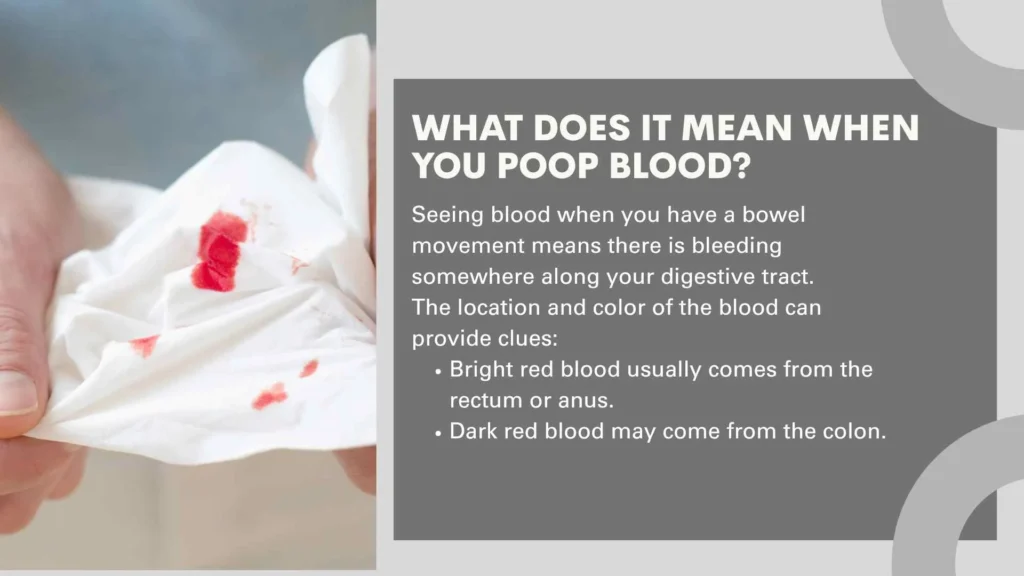
Seeing blood when you have a bowel movement means there is bleeding somewhere along your digestive tract.
The location and color of the blood can provide clues:
- Bright red blood usually comes from the rectum or anus.
- Dark red blood may come from the colon.
- Black or tar-like stool can indicate bleeding from the stomach or upper digestive tract.
Although some causes are relatively minor, such as hemorrhoids, others—including inflammatory bowel disease, diverticular bleeding, ulcers, or colorectal cancer—can be serious.
Full Meaning in Simple Words
In simple words, pooping blood means blood is mixed with or appears alongside your stool.
You may notice:
- Blood on the toilet paper
- Blood in the toilet bowl
- Blood coating the stool
- Stool that looks black and sticky
The cause isn’t always serious, but it’s important not to assume it’s harmless without proper evaluation, especially if the bleeding continues.
What Does It Mean in Text?
When someone says “I pooped blood” in a text message, they are usually describing a real health concern rather than using slang.
Example:
Alex: I noticed blood after using the bathroom today.
Jordan: You should contact a healthcare provider, especially if it keeps happening or you have pain.
This phrase has no special texting or internet meaning.
What Does It Mean on Social Media (TikTok, Instagram, etc.)?
On TikTok, Instagram, Reddit, or Facebook, people may discuss pooping blood when sharing personal health experiences or asking for advice.
There is no slang or hidden social media meaning.
Keep in mind that health advice shared on social media may not always be accurate, so medical concerns should be discussed with a qualified healthcare professional.
WhatsApp Chat Example
Emma: I noticed some bright red blood after using the bathroom.
Friend: It could be something minor like hemorrhoids, but you should get it checked if it continues.
Instagram DM Example
Friend: Is blood in stool normal?
You: It can happen for different reasons, but it’s worth talking to a doctor to be safe.
TikTok Comment Example
Video: “Signs you shouldn’t ignore.”
Comment: Blood in your stool is something you should have evaluated instead of guessing the cause.
Real-Life Meaning and Usage
People usually mention pooping blood when:
- Describing symptoms to a healthcare provider
- Seeking medical advice
- Discussing digestive health
- Learning about gastrointestinal conditions
Healthcare professionals often ask:
- What color was the blood?
- How much blood did you see?
- Was there pain?
- Did it happen once or repeatedly?
These details help narrow down possible causes.
Real-Life Situations Where This Term Is Used
You might hear this phrase during:
- Doctor appointments
- Emergency room visits
- Gastroenterology consultations
- Health education classes
- Medical articles
- Online health forums
- Family health discussions
Examples in Sentences
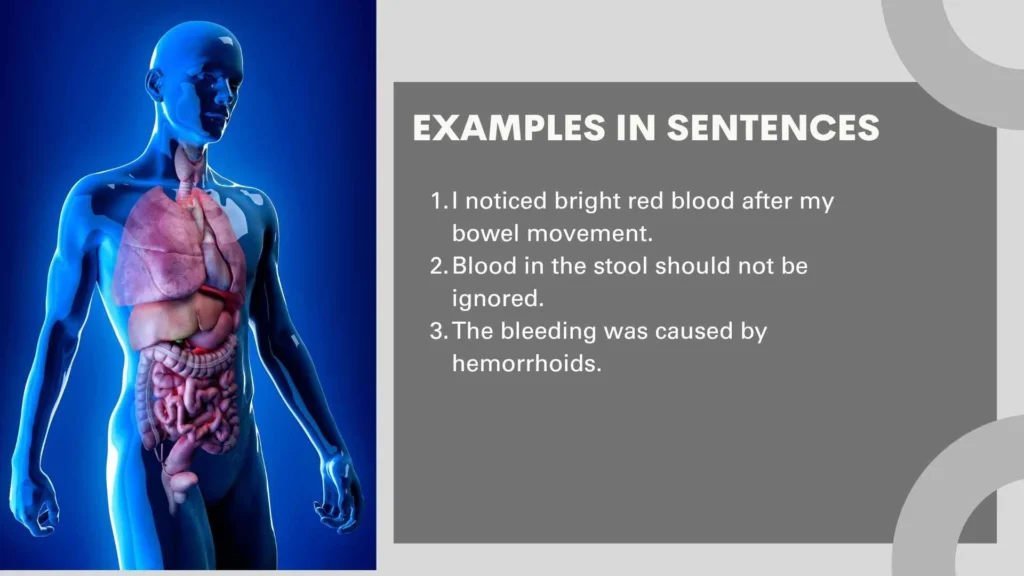
- I noticed bright red blood after my bowel movement.
- My doctor asked whether the blood was bright red or dark.
- Blood in the stool should not be ignored.
- He scheduled an appointment after seeing blood on the toilet paper.
- The bleeding was caused by hemorrhoids.
- Black stools may suggest bleeding higher in the digestive tract.
- Persistent rectal bleeding should be evaluated by a healthcare provider.
Different Contexts
Medical Context
This is the most common use.
Healthcare providers use the phrase when discussing symptoms and diagnosis.
Educational Context
Teachers and health educators explain possible causes and warning signs.
Everyday Conversation
Friends or family may discuss the symptom when encouraging someone to seek care.
Online Health Discussions
People often ask questions about blood in stool, but online advice should not replace professional evaluation.
Origin and History of the Term
The phrase “pooping blood” is an everyday way of describing rectal bleeding or blood in the stool.
Medical professionals may use more specific terms such as:
- Rectal bleeding
- Blood in stool
- Lower gastrointestinal bleeding
- Upper gastrointestinal bleeding (if the blood source is higher in the digestive tract)
As health information became more accessible online, the plain-language phrase “pooping blood” became a common search term because it is easy for people to understand.
Why Do People Use This Phrase?
People use this phrase because it clearly describes a symptom they have noticed.
Common reasons include:
- Looking for medical information
- Deciding whether to see a doctor
- Explaining symptoms to family
- Searching online for possible causes
Emotional & Psychological Meaning Behind This Symptom
Seeing blood during a bowel movement can cause:
- Fear
- Anxiety
- Embarrassment
- Worry
- Confusion
Many people hesitate to discuss digestive symptoms because they feel uncomfortable, but seeking medical advice early is often the best approach.
Tone Explanation
Medical Tone
Most appropriate when discussing symptoms with healthcare providers.
Informal Tone
Friends or family may use simple language like:
“I saw blood when I went to the bathroom.”
Slang
This phrase is not slang.
It describes an actual medical symptom.
Is It Rude to Say This?
No.
While it may feel uncomfortable because it involves bathroom habits, it is not rude when discussing health.
Healthcare providers hear this type of symptom regularly.
Is This Phrase Positive, Negative, or Neutral?
The phrase is generally neutral in language but refers to a symptom that may indicate a medical problem.
It should be taken seriously rather than ignored.
When to Use This Phrase
Use it when:
- Describing symptoms accurately
- Talking with a healthcare provider
- Seeking medical advice
- Discussing digestive health
When NOT to Use This Phrase
Avoid using it:
- As a joke about someone’s health
- To self-diagnose without medical evaluation
- To assume a specific cause without evidence
Situations Where You Should Avoid Ignoring This Symptom
Seek prompt medical attention if you have blood in your stool along with:
- Heavy bleeding
- Dizziness or fainting
- Severe abdominal pain
- Vomiting blood
- Black, tarry stools
- Fever
- Unexplained weight loss
- Persistent or recurrent bleeding
Even if the bleeding seems minor, you should arrange a medical evaluation if it keeps happening or if you’re unsure of the cause.
Comparison Table
| Term | Meaning | Usage | Key Difference |
| Blood in stool | Blood mixed with or on stool | General symptom | Can originate anywhere in the digestive tract |
| Rectal bleeding | Bleeding from the rectum or anus | Medical discussions | Refers specifically to bleeding exiting the rectum |
| Hemorrhoids | Swollen veins near the anus or rectum | Common cause | Often causes bright red blood, itching, or discomfort |
| Anal fissure | Small tear in the lining of the anus | Common cause | Often causes pain during bowel movements and bright red bleeding |
Variations and Related Terms
Related medical terms include:
- Blood in stool
- Rectal bleeding
- Bright red blood per rectum
- Black stool
- Tarry stool
- Gastrointestinal bleeding
- Lower GI bleeding
- Upper GI bleeding
- Bloody bowel movement
- Bloody stool
Each term may describe bleeding from different parts of the digestive system.
How to Respond
Casual Replies
- That sounds like something you should get checked.
- It may not be serious, but don’t ignore it.
- Consider calling your doctor.
Supportive Replies
- I’m sorry you’re dealing with that.
- It makes sense to have it evaluated.
- Hopefully it’s something minor, but it’s worth getting checked.
Professional Replies
- Blood in the stool can have several causes and should be assessed by a healthcare professional.
- If the bleeding is heavy, recurrent, or accompanied by severe symptoms, seek urgent medical care.
- A healthcare provider can determine the cause through your history, examination, and, if needed, further testing.
USA / Western Usage
In the United States, healthcare organizations encourage people not to ignore blood in the stool, even if they suspect hemorrhoids.
Doctors often recommend medical evaluation, particularly for:
- Adults over 45
- Recurrent bleeding
- Family history of colorectal cancer
- Changes in bowel habits
- Unexplained weight loss
Global or Internet Usage Differences
Across the world, people commonly search for this symptom using phrases like:
- Blood in poop
- Blood in stool
- Bloody stool
- Rectal bleeding
On social media, personal experiences are frequently shared, but diagnosis should always come from a qualified healthcare professional rather than online comments.
What Does It Mean in Text?
In text messages, the phrase simply describes seeing blood during or after a bowel movement. It is not an abbreviation, code word, or slang expression.
What Does It Mean on TikTok / Instagram?
On TikTok and Instagram, people may discuss digestive health or share experiences related to rectal bleeding. However, social media should not be used to diagnose the cause of blood in stool.
Is It Rude to Say This?
No. It is a legitimate medical symptom. Although the topic may feel embarrassing, using clear language can help you communicate effectively with healthcare providers and loved ones.
Why Do People Use This Phrase?
People use this phrase because it plainly describes a concerning symptom and helps them seek answers about their health. Using clear, direct language also makes it easier for healthcare providers to understand what happened.
Frequently Asked Questions
Is bright red blood in stool always serious?
Not always. Bright red blood is often caused by hemorrhoids or an anal fissure, but it can also be a sign of more serious conditions. If the bleeding is recurrent, heavy, or unexplained, it should be evaluated by a healthcare provider.
What does black stool mean?
Black, tarry stool can indicate bleeding higher in the digestive tract, such as the stomach or small intestine. It should be assessed promptly because it may represent significant internal bleeding.
Can constipation cause blood when you poop?
Yes. Hard stools and straining can cause small tears (anal fissures) or irritate hemorrhoids, leading to bright red bleeding.
Should I go to the emergency room if I poop blood?
Seek emergency care if you have heavy bleeding, feel faint, have severe abdominal pain, vomit blood, or pass black tarry stools. Smaller amounts of blood should still be discussed with a healthcare provider, especially if they recur.
Can hemorrhoids cause blood in stool?
Yes. Hemorrhoids are a common cause of bright red blood on toilet paper or in the toilet bowl, but they are not the only possible cause.
Is blood in stool a sign of colon cancer?
It can be one possible cause, but many other conditions are more common. Because blood in the stool has multiple possible causes, persistent or unexplained bleeding should always be medically evaluated rather than assumed to be hemorrhoids or cancer.
When should I see a doctor?
You should arrange a medical evaluation if the bleeding is recurrent, unexplained, accompanied by pain, changes in bowel habits, weight loss, or any concerning symptoms. Seek urgent care immediately for heavy bleeding or signs of significant blood loss.
Conclusion
Understanding what does it mean when you poop blood is important because blood in the stool can range from a minor issue, such as hemorrhoids or an anal fissure, to a more serious condition affecting the digestive tract. The color of the blood, the amount, and any accompanying symptoms provide important clues, but they cannot reliably identify the cause on their own. While some cases are not emergencies, persistent, recurrent, or heavy rectal bleeding should never be ignored. If you notice blood during a bowel movement, especially with severe pain, dizziness, black stools, or ongoing bleeding, seek prompt medical evaluation to determine the cause and receive appropriate treatment.