Nomadic means moving from one place to another instead of living permanently in one location. It often describes people, communities, or lifestyles that involve regular travel in search of work, food, resources, or new experiences.
Today, the word nomadic can refer to both traditional nomads and modern lifestyles, such as digital nomads who work remotely while traveling.
Quick Meaning
Here are the most common meanings of nomadic:
- Moving from place to place rather than living permanently in one location.
- Living a traveling lifestyle.
- Describing traditional communities that migrate seasonally.
- Referring to modern digital nomads who work while traveling.
Nomadic means living or traveling without a permanent home, often moving regularly from one place to another.
What Does Nomadic Mean?
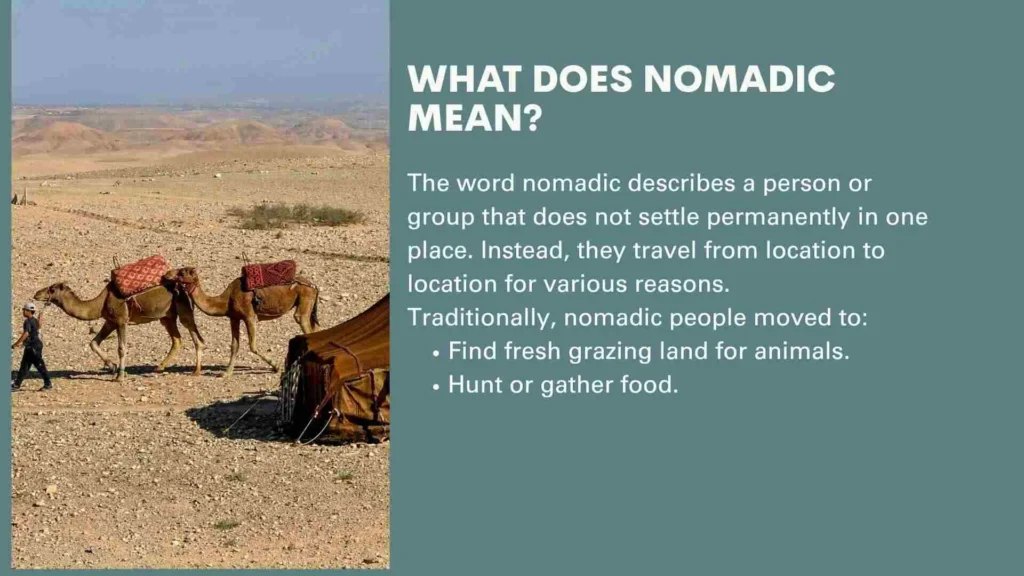
The word nomadic describes a person or group that does not settle permanently in one place. Instead, they travel from location to location for various reasons.
Traditionally, nomadic people moved to:
- Find fresh grazing land for animals.
- Hunt or gather food.
- Follow seasonal weather patterns.
- Trade with other communities.
Today, the term is also used for people who choose a mobile lifestyle, such as remote workers who travel while earning a living.
Full Meaning in Simple Words
In simple words, nomadic means living a life where you regularly move from one place to another instead of staying in one permanent home.
For example:
- A family that travels across different regions with their livestock is living a nomadic lifestyle.
- A graphic designer who works online while traveling between countries is a digital nomad.
Although their reasons differ, both examples involve a lifestyle centered around movement rather than permanent settlement.
What Does Nomadic Mean in Text?
In text messages, emails, or online conversations, nomadic usually keeps its standard meaning.
Examples:
Friend: “I’ve been living a nomadic life for the past year.”
Meaning:
“I’ve been traveling instead of staying in one place.”
Another example:
“Our company supports a nomadic work style.”
Meaning:
“Employees can work while traveling.”
The word is not commonly used as internet slang.
What Does Nomadic Mean on Social Media (TikTok, Instagram, etc.)?
On TikTok, Instagram, YouTube, and LinkedIn, nomadic often refers to:
- Digital nomads
- Remote workers
- Travel bloggers
- Van life creators
- Backpackers
- People exploring different countries while working online
Creators frequently share tips on:
- Working remotely
- Traveling on a budget
- Living in vans or RVs
- Finding coworking spaces
- Balancing work and travel
Platform-Based Examples
WhatsApp Chat Example
Emma: Where are you living now?
Sophia: I’m still nomadic. This month I’m in Portugal!
Instagram DM Example
Alex: Your travel photos are amazing.
Jordan: Thanks! I’ve been living a nomadic lifestyle for two years.
TikTok Comment Example
“I’d love to try a nomadic lifestyle and work remotely around the world.”
Real-Life Meaning and Usage
The word nomadic appears in many real-life situations.
Common examples include:
- Traditional herding communities
- Travel writers
- Digital nomads
- Van life enthusiasts
- Seasonal workers
- Adventure travelers
Today, the phrase digital nomad has become especially popular because technology allows many people to work from almost anywhere with an internet connection.
Real-Life Situations Where This Term Is Used
Traditional Communities
Some cultures continue to live nomadically by moving with their animals throughout the year.
Remote Work
Many professionals work online while traveling between cities or countries.
Travel
Long-term travelers often describe themselves as nomadic.
Adventure Lifestyle
People living in campers, vans, or RVs may call their lifestyle nomadic because they frequently change locations.
Examples of Nomadic in Sentences
- The tribe has lived a nomadic lifestyle for generations.
- She enjoys a nomadic life while working remotely.
- Many digital nomads travel across Europe each year.
- His nomadic career allows him to explore new countries.
- The family moved seasonally as part of their nomadic tradition.
- Nomadic cultures have existed for thousands of years.
- They embraced a nomadic lifestyle after selling their house.
Different Contexts of Nomadic
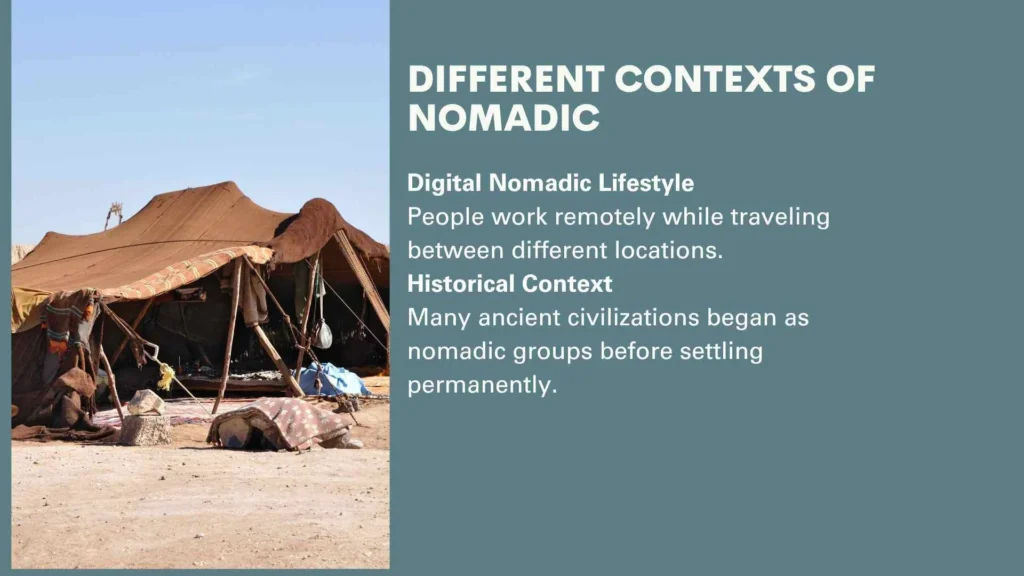
Traditional Nomadic Lifestyle
Communities move with livestock or follow seasonal resources.
Digital Nomadic Lifestyle
People work remotely while traveling between different locations.
Historical Context
Many ancient civilizations began as nomadic groups before settling permanently.
Personal Lifestyle
Someone may describe themselves as nomadic if they frequently relocate for work or personal choice.
Origin and History of the Word
The word nomadic comes from the Greek word nomas, meaning “wandering in search of pasture.” It entered English through Latin and French and was originally used to describe groups that moved seasonally with their animals.
Over time, its meaning expanded to include anyone living a mobile lifestyle without a permanent home.
Why Do People Use This Word?
People use nomadic because it clearly describes a lifestyle centered around movement rather than permanent settlement.
It is commonly used when discussing:
- Travel
- History
- Anthropology
- Remote work
- Digital nomads
- Cultural traditions
Emotional & Psychological Meaning Behind This Word
The word nomadic often brings to mind:
- Freedom
- Adventure
- Independence
- Curiosity
- Flexibility
- Exploration
For some, it represents an exciting way to experience the world. For others, it reflects adaptability and resilience.
Tone Explanation
The word nomadic is generally:
- Formal: ✔ Yes
- Academic: ✔ Common
- Professional: ✔ Yes
- Informal: ✔ Also common
- Slang: No
- Offensive: No
It works well in both casual and professional conversations.
Is It Rude to Say This Word?
No.
Nomadic is a neutral and respectful word. It simply describes a lifestyle or way of living.
However, it’s best to use it accurately and respectfully when referring to traditional nomadic communities.
Is This Word Positive, Negative, or Neutral?
Generally, nomadic people are neutral.
Depending on the context, it can have positive associations with freedom and exploration or simply describe a traditional lifestyle without any judgment.
When to Use Nomadic
Use this word when discussing:
- Traveling lifestyles
- Digital nomads
- Traditional cultures
- Seasonal migration
- Anthropology
- History
- Remote work
Examples:
- Nomadic tribe
- Nomadic lifestyle
- Nomadic community
- Digital nomadic career
When NOT to Use Nomadic
Avoid using nomadic when referring to someone who only takes occasional vacations or moves house once in a while. The word suggests a pattern of regular movement rather than infrequent travel.
Situations Where You Should Avoid Using This Word
Avoid using the word if:
- Someone has a permanent residence and only travels for holidays.
- You’re referring to homelessness, unless discussing a specific nomadic lifestyle by choice or tradition.
- The movement is temporary and not a defining lifestyle.
Nomadic Compared with Similar Terms
| Term | Meaning | Common Usage | Key Difference |
| Nomadic | Moving from place to place | Lifestyle, history | No permanent home |
| Migratory | Moving seasonally | Animals, birds, some human groups | Usually follows seasonal patterns |
| Traveler | Someone who travels | General travel | May still have a permanent home |
| Wanderer | Someone who roams freely | Literature, casual speech | Often emphasizes exploration rather than a lifestyle |
Variations and Related Meanings of Nomadic
Depending on the context, nomadic may refer to:
- Traditional nomadic lifestyle – Moving with livestock or resources.
- Digital nomad – Working remotely while traveling.
- Nomadic tribe – A community without permanent settlements.
- Nomadic culture – Customs centered on mobility.
- Nomadic herding – Raising livestock while migrating.
- Nomadic travel – Continuous travel without a fixed base.
- Van life – Living and traveling in a vehicle.
- Mobile lifestyle – Frequently changing locations.
- Seasonal migration – Moving according to weather or resources.
- Remote work lifestyle – Traveling while maintaining an online career.
How to Respond When Someone Mentions a Nomadic Lifestyle
Casual Replies
- “That sounds exciting!”
- “You must have amazing stories.”
- “I’d love to travel like that.”
Funny Replies
- “Your suitcase must never get dusty!”
- “Home is wherever your Wi-Fi connects!”
Professional or Mature Replies
- “That lifestyle offers a unique perspective on the world.”
- “Remote work has made nomadic living more accessible.”
Cultural Usage
USA / Western Usage
In the United States and many Western countries, nomadic often refers to digital nomads, travel enthusiasts, and people who work remotely while exploring different places.
Global or Internet Usage Differences
Globally, nomadic still commonly describes traditional communities that move seasonally with livestock. Online, however, the term has expanded to include remote workers, van lifers, and long-term travelers.
What Does Nomadic Mean in Text?
In text messages, nomadic means living or traveling without staying in one permanent place. It is not used as slang or an abbreviation.
What Does Nomadic Mean on TikTok / Instagram?
On TikTok and Instagram, nomadic is often associated with travel content, digital nomads, van life, remote work, and exploring the world while maintaining a flexible lifestyle.
Is It Rude to Say This?
No. The word is respectful and neutral. It should simply be used accurately when describing lifestyles or communities that involve regular movement.
Why Do People Use This Word?
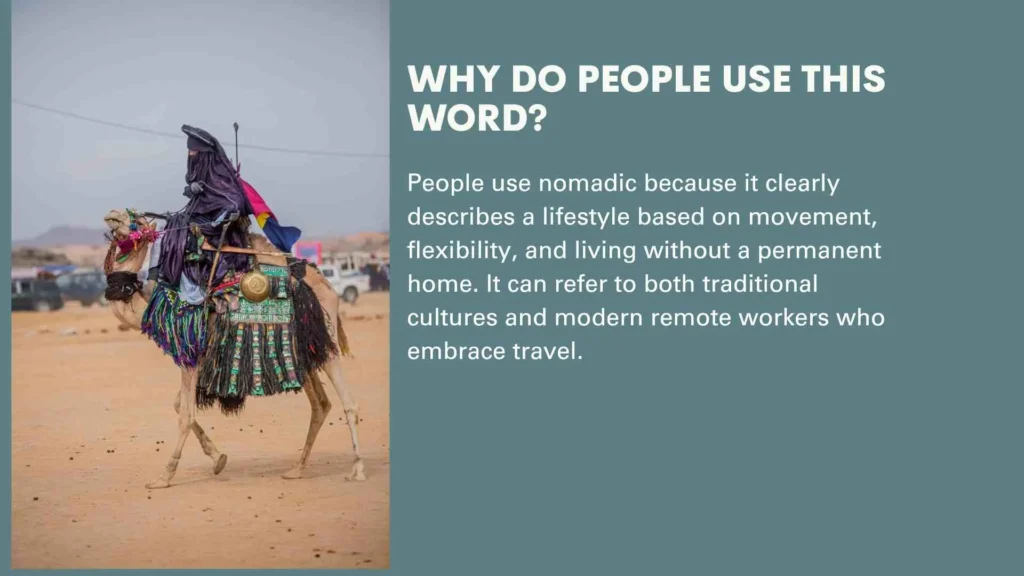
People use nomadic because it clearly describes a lifestyle based on movement, flexibility, and living without a permanent home. It can refer to both traditional cultures and modern remote workers who embrace travel.
Frequently Asked Questions (FAQs)
1. What does nomadic mean in simple words?
It means moving from place to place instead of living permanently in one location.
2. What is a nomadic lifestyle?
A nomadic lifestyle involves regularly traveling or relocating rather than staying in one permanent home.
3. What is a digital nomad?
A digital nomad is someone who works remotely using the internet while traveling to different cities or countries.
4. Is nomadic the same as homeless?
No. Nomadic living is often a cultural tradition or personal lifestyle choice, while homelessness refers to lacking stable housing.
5. Are there still nomadic people today?
Yes. Some traditional communities continue to live nomadically, and many modern digital nomads also embrace a mobile lifestyle.
6. Is nomadic a positive word?
Generally, yes. It is a neutral term that often carries positive associations with freedom, adaptability, and exploration.
7. What is the opposite of nomadic?
The opposite is sedentary or settled, meaning living permanently in one place.
Conclusion
Understanding what nomadic means helps explain both ancient traditions and modern lifestyles. A nomadic person or community moves from place to place rather than settling permanently, whether for cultural, economic, or personal reasons. Today, the term also describes digital nomads who combine remote work with travel. Whether referring to traditional herders or modern travelers, nomadic reflects adaptability, mobility, and a way of life built around exploration rather than permanent settlement.