
Simping means showing too much attention, admiration, or affection toward someone, often to the point where it seems excessive or one-sided—especially in a romantic context. It’s commonly used online to describe someone who tries too hard to impress or please another person.
Have you ever seen someone comment “Stop simping!” under a post and wondered what it actually means? You’re not alone.
The term simping pops up everywhere—text messages, WhatsApp chats, TikTok comments, and gaming chats. But for many people, especially beginners, the meaning can feel confusing or even a little harsh.
In this guide, you’ll learn what does simping mean, where it’s used, and how to understand it in different situations—without overthinking it.
What Does Simping Mean in Text?
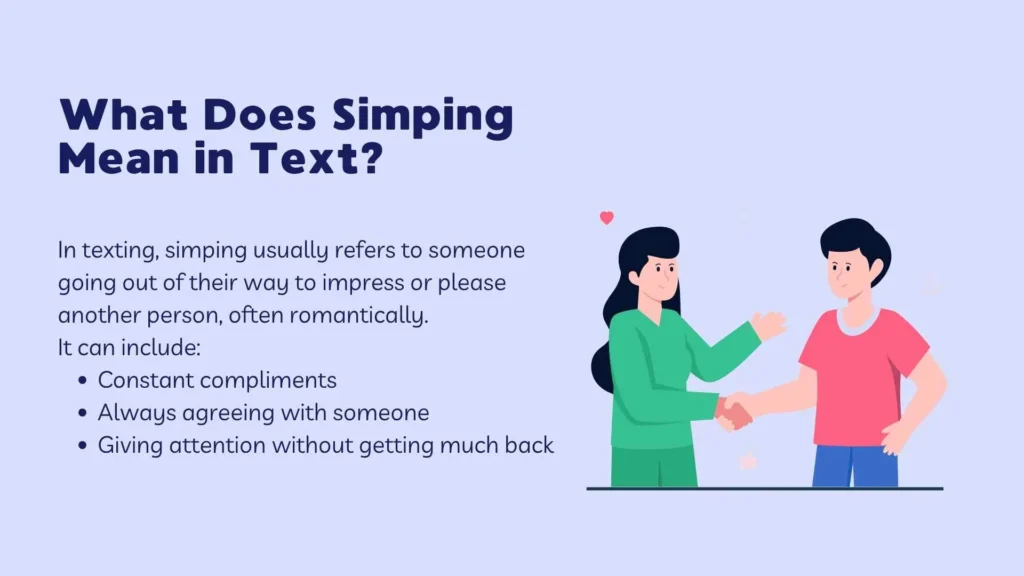
In texting, simping usually refers to someone going out of their way to impress or please another person, often romantically.
It can include:
- Constant compliments
- Always agreeing with someone
- Giving attention without getting much back
Simple Examples:
- “Bro, you’re replying to her in 2 seconds every time… stop simping.”
- “He bought her gifts and she ignores him. That’s simping.”
👉 The tone can be joking or slightly negative, depending on context.
Quick Recap
- Simping = overdoing attention or admiration
- Usually about crushes or relationships
- Often used in a playful or teasing way
What Does Simping Mean in Chat?
In chat conversations (like WhatsApp or Messenger), simping is used casually among friends.
Meaning in Chat:
It means someone is acting overly nice or obsessed with a person they like.
Examples:
- “You stayed up all night just to talk to her? Simping level 100.”
- “He defends her in every argument—total simp.”
- “Stop simping bro, she’s not even replying.”
👉 In chats, it’s often used as friendly teasing between friends.
Simping Meaning in English
Simping meaning in English refers to showing excessive admiration, attention, or affection toward someone, often in a way that makes a person ignore their own self-respect or dignity. The word “simp” is modern internet slang that became popular on social media platforms like TikTok, X (Twitter), Instagram, and Reddit. While it originally had a more negative meaning, today it is often used jokingly among friends.
A person who is “simping” may constantly compliment someone, always agree with them, buy expensive gifts, or put in a lot of effort without receiving the same level of interest or respect in return. However, being kind, respectful, or caring does not automatically make someone a simp. The key difference is whether the behavior is healthy and balanced or one-sided.
For example:
- A man spends all his money on someone who never replies to his messages. His friends say he is simping.
- A girl constantly cancels her own plans just to get someone’s attention. Others may describe that as simping.
- Someone keeps praising their favorite celebrity in every post. People may jokingly say they are simping.
Today, the word is commonly used in memes, online conversations, gaming communities, and pop culture. Depending on the context, it can be playful or insulting. Understanding the tone of the conversation is important before using the term because not everyone sees it the same way.
Simping Meaning in Chat
Simping meaning in chat is when someone uses the word “simping” in text messages, social media chats, or online conversations to describe a person who is giving too much attention or affection to someone else. In chat language, the term is usually informal and is often meant as a joke rather than a serious insult.
You may see messages like:
- “Stop simping for her.”
- “He’s simping again.”
- “You’re really simping over that influencer.”
These phrases usually suggest that someone is acting overly eager to impress another person, especially someone they like romantically or admire online. In many cases, friends use the word humorously when teasing each other.
Here are a few chat examples:
Example 1
- Alex: “I liked all her Instagram photos.”
- Ben: “Bro, you’re simping.”
Example 2
- Mia: “He bought her coffee again.”
- Emma: “He’s definitely simping.”
Example 3
- Jake: “I watched every livestream she posted.”
- Ryan: “You’re simping so hard.”
The meaning always depends on the context. Sometimes it is lighthearted, while other times it may criticize someone for putting another person on a pedestal. It is most common in texting, gaming chats, Discord servers, Snapchat, WhatsApp, and social media comments.
When chatting online, avoid using the term if it could offend someone. What one group considers harmless teasing, another person may find disrespectful.
Simping Meaning in Relationship
Simping meaning in relationship describes behavior where one partner gives far more time, attention, affection, or effort than the other, often without receiving equal care or respect. It usually refers to an unhealthy imbalance rather than genuine love or commitment.
A healthy relationship is built on mutual respect, communication, trust, and shared effort. Simping, on the other hand, is often associated with constantly trying to please someone at the expense of your own needs. This might include always saying yes, ignoring red flags, or accepting poor treatment just to keep the relationship.
Examples include:
- Someone repeatedly apologizes even when they have done nothing wrong.
- A partner spends excessive money trying to earn affection that is never returned.
- A person changes their entire personality just to make someone like them.
It is important to understand that showing kindness, loyalty, or emotional support is not simping. Healthy relationships involve caring for each other equally. The label usually applies when one person’s actions become extreme, one-sided, or unhealthy.
Many relationship experts encourage setting clear boundaries, respecting yourself, and expecting mutual effort. If both partners value and support each other, their relationship is based on love rather than unhealthy dependence.
In modern dating culture, people sometimes overuse the word “simp.” Someone expressing genuine affection should not automatically be called a simp. Looking at the overall balance of the relationship gives a much more accurate picture.
Simp Meaning for Boy
Simp meaning for boy refers to a boy or man who is described as giving excessive attention, admiration, or favors to someone they like, often while receiving little appreciation or interest in return. The term is mostly used in internet slang and casual conversations.
A boy may be called a simp if he:
- Constantly seeks someone’s approval.
- Always agrees with everything they say.
- Spends large amounts of money trying to impress them.
- Ignores how poorly he is being treated.
For example:
- A teenager buys expensive gifts for someone who never talks to him outside school.
- A college student cancels plans with friends every time his crush texts him.
- A gamer spends money on a streamer hoping to get personal attention.
However, there is an important difference between being respectful and being a simp. A polite boy who treats others with kindness is not necessarily simping. Respect, generosity, and good manners are positive qualities. The term usually applies only when someone sacrifices their self-respect or constantly seeks validation from another person.
The slang word is frequently used among teenagers, young adults, and online communities. Sometimes it is used jokingly between friends, while other times it is intended as criticism. Because of this, understanding the situation and the speaker’s tone is essential before interpreting the word.
Simping Over Meaning
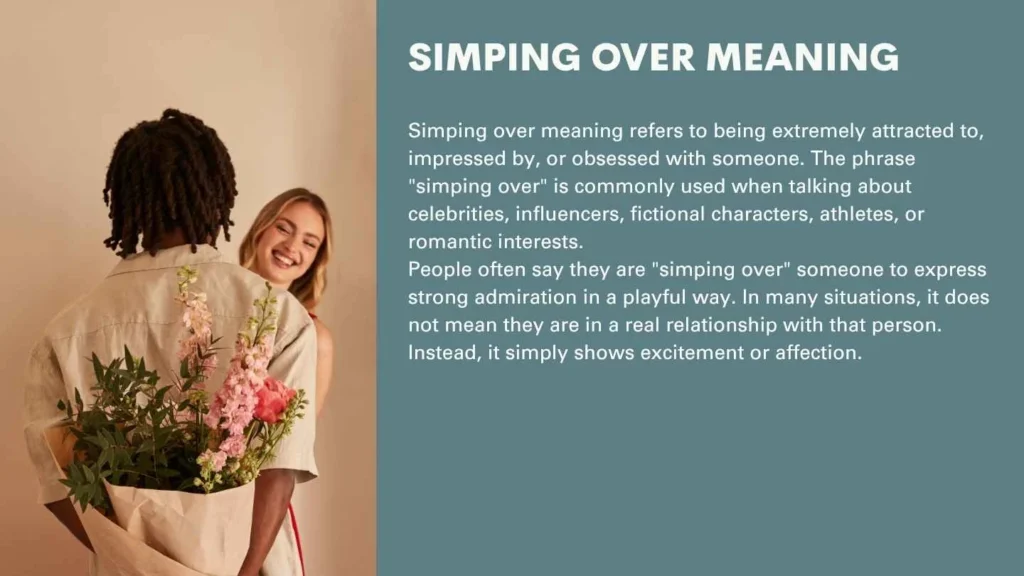
Simping over meaning refers to being extremely attracted to, impressed by, or obsessed with someone. The phrase “simping over” is commonly used when talking about celebrities, influencers, fictional characters, athletes, or romantic interests.
People often say they are “simping over” someone to express strong admiration in a playful way. In many situations, it does not mean they are in a real relationship with that person. Instead, it simply shows excitement or affection.
Examples include:
- “Everyone is simping over the new movie star.”
- “She’s simping over her favorite singer.”
- “Fans are simping over the game’s main character.”
On social media, the phrase appears in comments, memes, reaction videos, and fan discussions. It often describes people who repeatedly praise someone’s appearance, personality, talent, or style.
Depending on the context, “simping over” can have different meanings:
- Genuine admiration for someone’s talent.
- Romantic interest or attraction.
- Humorous exaggeration among friends.
- Criticism for giving someone too much attention.
The phrase has become part of everyday internet culture. While it is often used casually, it should not be confused with healthy appreciation. Admiring someone is completely normal, but if it becomes obsessive or affects your own well-being, people may describe it as excessive simping.
Simping Meaning in Chinese
Simping meaning in Chinese can be translated in different ways depending on the context because there is no perfect one-word equivalent. The most common translation is 舔狗 (tiǎn gǒu), which literally means “licking dog.” It is Chinese internet slang used to describe someone who constantly chases another person’s attention or affection without receiving the same feelings in return.
Another possible translation is:
- 过度讨好喜欢的人 (guòdù tǎohǎo xǐhuān de rén) – excessively trying to please someone you like.
- 一味讨好别人 (yīwèi tǎohǎo biérén) – blindly pleasing someone else.
Examples:
- A man keeps sending gifts to someone who never responds. Chinese internet users may call him 舔狗.
- Someone always agrees with their crush just to get noticed. This behavior may also be described using the same slang.
- Fans who constantly praise a celebrity might jokingly say they are “simping,” although context matters.
Chinese social media platforms such as Weibo, Douyin, and Bilibili use 舔狗 in a way that is similar to the English word “simp.” However, the Chinese term often carries a stronger negative meaning, suggesting that someone has lost their self-respect while trying to gain another person’s affection.
When translating “simping,” always consider the situation because the most accurate Chinese expression depends on whether the meaning is humorous, romantic, or critical.
Simping Meaning in Arabic
Simping meaning in Arabic does not have one exact equivalent because it is modern English internet slang. Instead, it is usually translated by explaining the behavior rather than using a single Arabic word.
Common Arabic expressions include:
- المبالغة في التودد لشخص – excessively trying to win someone’s affection.
- التصرف بخضوع من أجل شخص تحبه – acting submissively for someone you like.
- شخص يبالغ في إرضاء الطرف الآخر – a person who excessively tries to please someone else.
These translations describe someone who gives too much attention, admiration, or effort to another person, especially without receiving the same treatment in return.
Examples:
- A young man constantly buys gifts for someone who ignores him. People may describe his behavior using one of the Arabic expressions above.
- A person keeps complimenting a social media influencer hoping for recognition.
- Someone always changes their plans just to make another person happy.
In Arabic-speaking communities, younger internet users sometimes use the English word “simp” directly, especially in online gaming, TikTok videos, and social media discussions. Others prefer descriptive Arabic phrases because there is no widely accepted slang equivalent across all Arabic-speaking countries.
Whether in English or Arabic, the idea behind simping is the same: showing excessive admiration or affection in an unbalanced way. Healthy relationships should always involve mutual respect, appreciation, and personal boundaries rather than one-sided effort.
What Does Simping Mean on Snapchat?
On Snapchat, simping is often linked to:
- Sending too many snaps to one person
- Constant replies or streak efforts
- Trying too hard to get attention
Examples:
- “You sent her 10 snaps today? That’s simping.”
- “He keeps replying to her stories—simp vibes.”
- “Maintaining streak just for her? Simp.”
👉 Snapchat culture makes simping look like effort imbalance.
What is an example of simping?
A simple example of simping is when someone constantly puts another person on a pedestal while expecting little or nothing in return. In modern internet slang, simping usually describes someone who gives excessive attention, compliments, gifts, or favors to a romantic interest, even when the effort is one-sided or unappreciated.
It’s important to understand that being kind, respectful, or supportive does not automatically make someone a simp. The term is generally used when someone’s behavior becomes overly submissive or emotionally dependent.
Here are a few real-life examples:
- A person buys expensive gifts for someone who rarely responds to their messages but continues spending money to gain attention.
- Someone cancels plans with friends every weekend just to wait for a text from their crush, even though the crush has shown no romantic interest.
- A social media follower donates large amounts of money to an influencer while expecting affection or recognition in return.
Healthy admiration involves mutual respect and balanced effort. Simping, on the other hand, often involves ignoring personal boundaries, self-respect, or emotional well-being for someone who gives little back.
The meaning of simping can also vary depending on context. Friends sometimes jokingly call someone a simp simply because they are affectionate toward their partner. In these cases, the word is often playful rather than serious.
Ultimately, an example of simping is any situation where someone repeatedly sacrifices their time, money, or dignity for another person without receiving the same level of care or appreciation. The key difference lies in whether the relationship is balanced and mutually respectful.
Is simping a bad thing?
Simping is not always a bad thing. Whether it is positive or negative depends on the behavior, the relationship, and the intentions behind it. Showing affection, loyalty, and generosity toward someone you care about is healthy when those feelings are mutual. However, simping becomes unhealthy when a person loses self-respect, ignores red flags, or constantly seeks approval from someone who does not value them.
Many people confuse kindness with simping, but they are not the same. Healthy relationships are built on equal effort, communication, and respect.
Simping may become harmful when someone:
- Constantly prioritizes another person’s needs over their own.
- Spends excessive money or time hoping to receive love or attention.
- Accepts poor treatment because they fear rejection.
- Changes their personality just to impress someone.
Here are some examples:
- A boyfriend regularly surprises his partner with thoughtful gifts, and she appreciates his efforts. This is healthy affection, not simping.
- A person keeps sending expensive presents after being repeatedly rejected. This is often considered unhealthy simping.
- Someone ignores friends, work, or personal goals just to chase a romantic interest who never reciprocates.
The internet often uses the word “simp” as a joke, so not every accusation should be taken seriously. Sometimes people call anyone who is caring or romantic a simp, even when their behavior is completely normal.
In reality, simping is only a bad thing when it creates an unhealthy imbalance, lowers self-esteem, or leads to emotional exploitation. Healthy love includes respect for both yourself and the other person.
Is simping flirting?
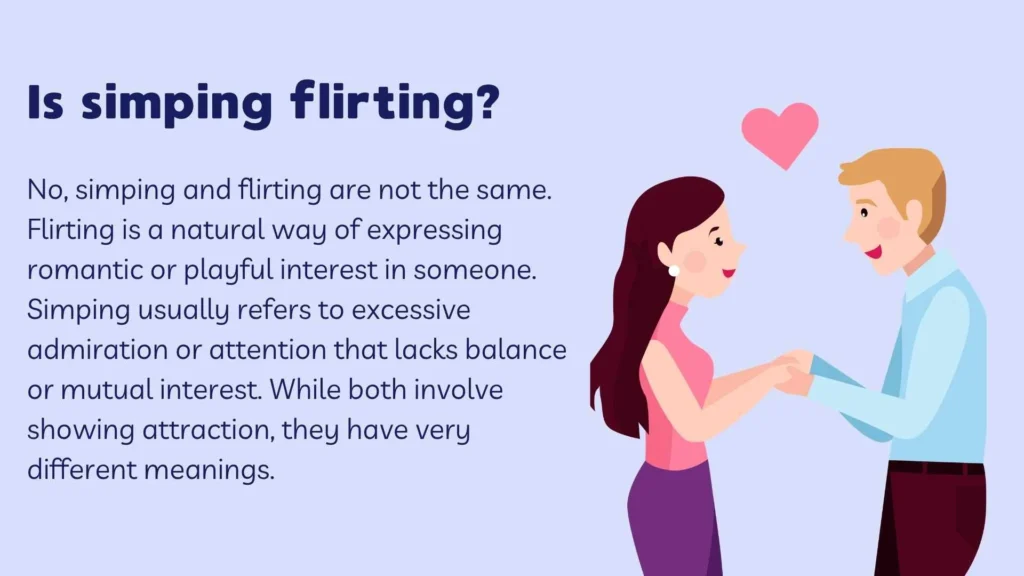
No, simping and flirting are not the same. Flirting is a natural way of expressing romantic or playful interest in someone. Simping usually refers to excessive admiration or attention that lacks balance or mutual interest. While both involve showing attraction, they have very different meanings.
Flirting is typically lighthearted, confident, and respectful. It allows both people to enjoy the interaction without placing one person above the other. Simping often suggests that someone is trying too hard to gain affection, sometimes at the expense of their own self-respect.
Here are the main differences:
- Flirting is mutual, playful, and based on confidence.
- Simping often involves over-investment, excessive compliments, or one-sided effort.
- Flirting respects boundaries and accepts rejection.
- Simping may continue despite a lack of interest from the other person.
Real-life examples include:
- Complimenting someone’s smile and asking them out politely is flirting.
- Sending dozens of messages after receiving no reply is often seen as simping.
- Buying thoughtful gifts in a committed relationship is caring behavior, not necessarily simping.
Many social media users use the word “simp” humorously whenever someone expresses affection. However, healthy flirting should never be confused with unhealthy emotional dependence.
The best approach is to show genuine interest while maintaining confidence and respecting boundaries. Flirting helps build attraction through conversation and shared interest, whereas simping often reflects an unequal dynamic where one person gives much more than they receive.
What is slang for simping?
Several slang words and phrases are used online to describe behavior similar to simping. While each term has a slightly different meaning, they all relate to showing excessive admiration, attention, or devotion toward someone, especially in a romantic context.
Some of the most common slang terms include:
- Simp – Someone who gives excessive attention or affection to another person, often without receiving the same effort in return.
- Down bad – Describes someone who is deeply attracted or emotionally obsessed with another person.
- Whipped – Refers to someone who is seen as overly controlled or influenced by their partner.
- Thirsty – Someone who appears desperate for attention, affection, or validation.
- Glazing – Internet slang for giving exaggerated praise or admiration to someone.
Here are a few examples:
- “He’s so down bad that he replies to every story within seconds.”
- “People joked that she was whipped because she changed all her plans for her boyfriend.”
- “The comments accused him of glazing the celebrity after nonstop compliments.”
These slang terms are widely used on platforms like TikTok, Instagram, Reddit, and X. However, they are often used humorously or sarcastically rather than as serious descriptions.
Language on the internet changes quickly, so the meaning of slang can evolve over time. It’s also worth remembering that using these labels doesn’t always accurately reflect someone’s real relationship. Genuine love, respect, and kindness should not automatically be mistaken for simping or any similar slang term.
How to sneakily flirt?
Sneakily flirting means showing romantic interest in a subtle, natural, and respectful way without being overly obvious. The goal is to create attraction through small actions rather than making dramatic declarations of affection. Healthy flirting should always respect personal boundaries and make both people feel comfortable.
Some simple ways to flirt subtly include:
- Maintain friendly eye contact during conversations.
- Smile naturally when you see the other person.
- Give sincere compliments about their personality or achievements.
- Use light humor to create a relaxed atmosphere.
- Show genuine curiosity by asking thoughtful questions.
- Remember details from previous conversations and mention them later.
Here are a few examples:
- You notice they mentioned an upcoming exam, so you later ask how it went. This shows genuine interest.
- You compliment their creativity after seeing a project they worked on instead of focusing only on appearance.
- You send a funny meme related to an inside joke you both share.
Subtle flirting is different from manipulation or playing mind games. Being “sneaky” should never involve misleading someone or hiding dishonest intentions. Instead, it means expressing attraction in a calm, respectful, and natural way.
The best flirting happens when both people enjoy the conversation and feel comfortable. Pay attention to their responses. If they smile, engage, and reciprocate, they may be interested. If they seem uncomfortable or uninterested, respect their boundaries and avoid pushing further.
Confidence, authenticity, and kindness are much more attractive than trying too hard to impress someone.
What is the 3 6 9 rule in dating?
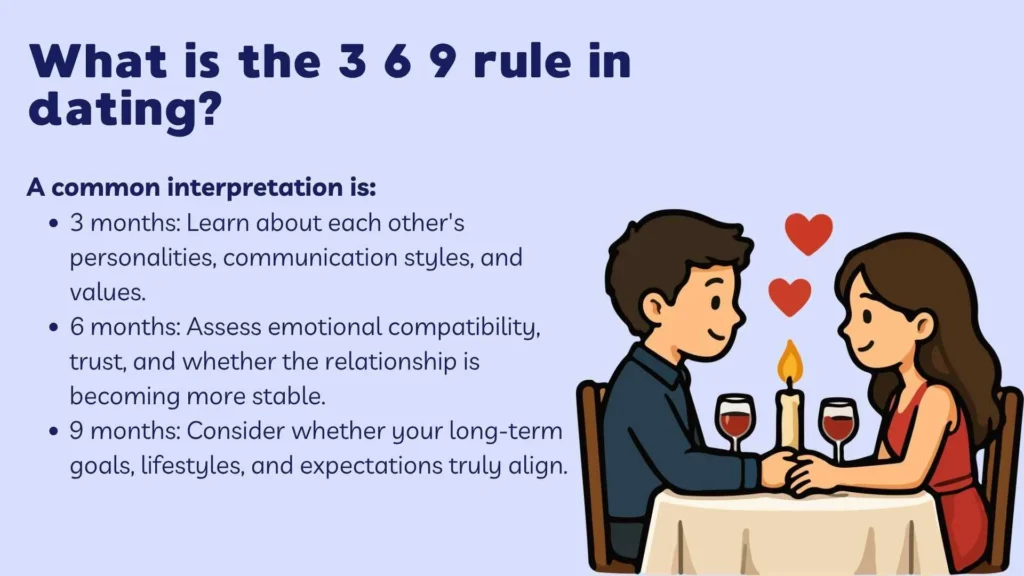
The 3-6-9 rule in dating is an informal relationship guideline that encourages couples to evaluate compatibility over time rather than rushing into serious commitments. There is no single official definition, but many people use it as a timeline for checking how a relationship develops at different stages.
A common interpretation is:
- 3 months: Learn about each other’s personalities, communication styles, and values.
- 6 months: Assess emotional compatibility, trust, and whether the relationship is becoming more stable.
- 9 months: Consider whether your long-term goals, lifestyles, and expectations truly align.
For example:
- After three months, you may realize that you enjoy spending time together and communicate well.
- At six months, you might notice how both of you handle disagreements, stress, and important decisions.
- By nine months, you may discuss future plans such as commitment, living together, or marriage if appropriate.
The 3-6-9 rule is not a scientific formula or a relationship guarantee. Every relationship develops at its own pace depending on the individuals involved, their life circumstances, and cultural expectations.
Instead of following the timeline rigidly, use it as a reminder to regularly evaluate important factors like trust, respect, communication, emotional support, and shared values. Strong relationships are built through honesty, mutual effort, and consistent respect rather than by reaching milestones on a fixed schedule.
What Does Simping Mean on Social Media?
On platforms like Instagram, TikTok, and Facebook, simping usually refers to public admiration or obsession.
Examples:
- Commenting “Queen 👑🔥❤️” on every post
- Liking every photo instantly
- Defending someone aggressively in comments
Example Sentences:
- “He comments on all her pics—simp behavior.”
- “Fans simping over celebrities in comments.”
- “Stop simping in her DMs.”
👉 Here, simping can be more visible and sometimes criticized.
Simping Meaning in Slang
In slang, simping has a slightly exaggerated meaning.
Slang Meaning:
- Being overly desperate for attention or love
- Putting someone on a pedestal
Important Note:
- It’s not always serious
- Often used in a joking or meme context
👉 Context matters a lot. Sometimes it’s just humor, not an insult.
Where Is It Used?
You’ll commonly see simping in:
- WhatsApp chats
- Instagram comments
- Snapchat streaks
- TikTok videos
- Gaming chats
- YouTube comments
Tone:
- Casual
- Informal
- Sometimes teasing or sarcastic
Real-Life Examples of Simping
Here are some realistic chat-style examples:
- “You bought her coffee again? Bro you’re simping hard.”
- “I skipped my plans just to talk to her… yeah I’m simping 😅”
- “He likes every single story she posts. Simp alert.”
- “Why are you always agreeing with her? Stop simping.”
- “I think I’m simping… I can’t say no to her.”
- “He’s doing too much for someone who doesn’t care—simp.”
- “Lowkey simping but I don’t care 😂”
When to Use and When NOT to Use
✅ DOs and ❌ DON’Ts
| Situation | Use “Simping”? | Why |
| Talking with friends | ✅ Yes | Casual and fun |
| Joking/teasing | ✅ Yes | Light humor |
| Serious conversation | ❌ No | Can sound rude |
| Professional setting | ❌ No | Too informal |
| Unknown people | ⚠️ Be careful | May offend |
What Does Simping Mean in Different Situations?
In Text
- Overly attentive or trying too hard
In Chat
- Friendly teasing about someone’s behavior
In Slang
- Exaggerated admiration or obsession
In Professional Context
- Rarely used (not appropriate)
Why It Became Popular
The word simping became popular because of:
- Social media platforms like TikTok and Twitter
- Meme culture
- Influencers and gaming communities
- Fast, short texting habits
👉 It spread quickly because it’s funny, relatable, and easy to use.
Comparison with Similar Terms
| Term | Meaning | Difference |
| Simping | Over-admiring someone | Often one-sided |
| Crushing | Liking someone | Normal and balanced |
| Obsessed | Extreme focus | Stronger than simping |
| Flirting | Playful attraction | Mutual interaction |
| Thirsty | Seeking attention | More desperate tone |
How Common Is It?
Simping is very common, especially among:
- Teenagers
- Young adults
- Social media users
- Gamers
👉 Older generations may not use it as much, but they still understand it.
Is Simping Safe to Use?
Yes—but only in the right context.
Safe When:
- Talking with friends
- Joking casually
- Online informal chats
Not Safe When:
- Talking to strangers
- In professional settings
- When someone may feel insulted
👉 Always consider tone and relationship.
What Does Simping Mean in Text Message?
It means trying too hard to impress or please someone, often romantically, through messages.
What Does Simping Mean in Chat?
In chat, it’s used to tease someone for giving too much attention to a person they like.
What Does Simping Mean on WhatsApp?
On WhatsApp, it refers to frequent texting, fast replies, or over-effort toward someone.
What Does Simping Mean on Snapchat?
It means sending too many snaps or replies to one person to gain attention.
What Does Simping Mean on Instagram?
It refers to constant liking, commenting, or praising someone’s posts excessively.
FAQ Section
1. Is simping a bad thing?
Not always. It can be negative if it’s one-sided or excessive, but sometimes it’s just playful.
2. Can simping be positive?
Yes, if it means showing genuine care, not overdoing it.
3. Is simping only for boys?
No. Anyone can simp—it’s not gender-specific.
4. What is a “simp”?
A simp is a person who shows too much attention or admiration.
5. Is simping the same as loving someone?
No. Love is balanced, while simping is often one-sided or exaggerated.
6. Why do people say “stop simping”?
They usually mean someone is trying too hard for attention.
7. Is simping used seriously?
Sometimes, but often it’s used jokingly.
8. Can simping be disrespectful?
Yes, if used in a mean or mocking way.
Conclusion
So, what does simping mean? In simple terms, it’s about giving too much attention or admiration to someone, especially in a romantic way.
The key thing to remember is context matters. Sometimes it’s just friendly teasing, and other times it can feel like criticism.
Use it wisely, keep it light, and you’ll understand this popular slang like a pro.

James Parker is a passionate writer and language enthusiast dedicated to helping readers understand words, meanings, and communication in a simple and effective way. With years of experience in educational writing and vocabulary research, he creates easy-to-understand content that helps students, learners, and readers improve their language skills.
At MeanNings.com, James focuses on providing accurate word meanings, English vocabulary, synonyms, antonyms, and practical language guides. His writing style is clear, informative, and designed for readers of all levels.
James believes that learning language should be simple, engaging, and accessible to everyone. Through his work, he aims to make complex words easier to understand and help readers build confidence in communication.
Books by James Parker
- The Power of Words
- Mastering Everyday Vocabulary
- English Meanings Simplified
 Daniel Brooks