A gap is a space, difference, break, or separation between two things. The word can refer to a physical space, a difference in opinions or skills, a period of time, or a missing part in something.
When people ask “what does gap mean,” they are usually referring to a distance, difference, or separation between people, objects, ideas, or events.
Quick Meaning
Here are the most common meanings of gap:
- A space or opening between two objects
- A difference between two things, such as skills, opinions, or results
- A break in time or activity
- A missing part or absence of something
What Does Gap Mean?
The meaning of gap depends on the situation.
In general, a gap represents something that separates one thing from another. Sometimes it is a physical space, while other times it refers to a difference in knowledge, performance, age, income, or understanding.
For example:
- A gap between two buildings
- A gap in employment history
- A generation gap between parents and children
- A knowledge gap between beginners and experts
The term is widely used in everyday conversations, education, business, technology, and social discussions.
Full Meaning in Simple Words
In simple words, a gap means:
“A space, distance, break, or difference that exists between two things.”
Think of a gap as something missing or separating one side from another.
Examples:
- There is a gap between the chairs.
- There is a gap in their understanding of the topic.
- She took a one-year gap before college.
- The company is trying to close the skill gap among employees.
What Does Gap Mean in Text?
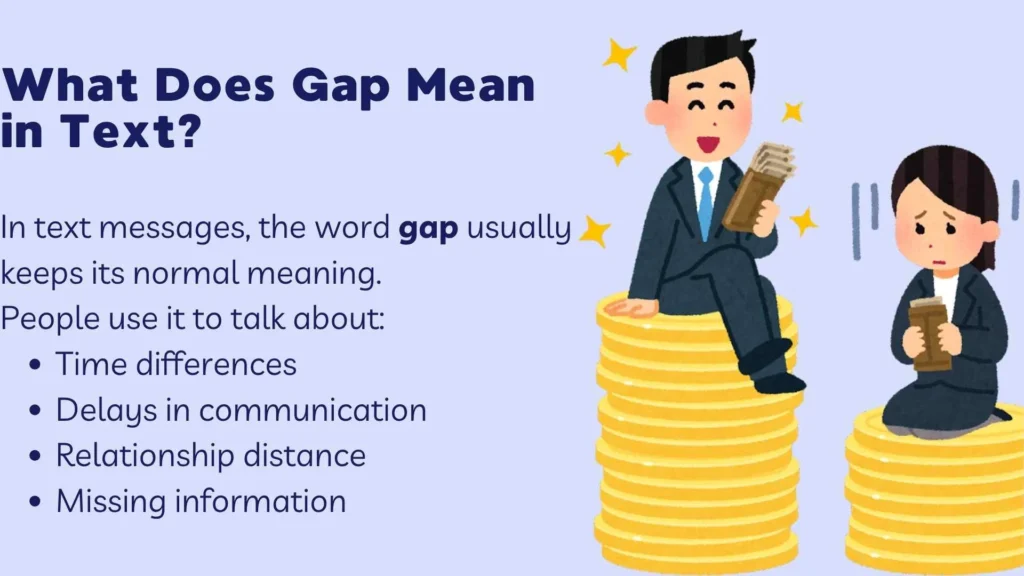
In text messages, the word gap usually keeps its normal meaning.
People use it to talk about:
- Time differences
- Delays in communication
- Relationship distance
- Missing information
Text Examples
Person A: Why didn’t you reply?
Person B: Sorry, there was a big gap between my classes today.
Person A: We haven’t talked in months.
Person B: Yeah, there’s been a huge gap in communication.
In texting, gap generally means a break, distance, or period of separation.
What Does Gap Mean on Social Media (TikTok, Instagram, etc.)?
On social media platforms like TikTok, Instagram, Facebook, and X, the word gap often refers to differences, comparisons, or periods of inactivity.
Common examples include:
- Age gap
- Wealth gap
- Skill gap
- Content gap
- Posting gap
Creators may say:
“There’s a huge gap between beginners and professionals.”
Or:
“Sorry for the posting gap!”
This means they haven’t uploaded content for a while.
WhatsApp Chat Example
Ali: Where have you been?
Sara: Sorry! There was a gap in my internet service.
Ali: No worries. Glad you’re back.
Here, gap means a temporary interruption.
Instagram DM Example
User 1: You haven’t posted lately.
User 2: Yeah, I took a short social media gap to focus on work.
In this example, gap means a break from social media.
TikTok Comment Example
Creator: I’ve improved a lot this year.
Comment: The skill gap between your old and new videos is amazing!
Here, gap means a noticeable difference in ability.
Real-Life Meaning and Usage
The word gap appears in many parts of daily life.
People use it when discussing:
- Education
- Relationships
- Business
- Technology
- Health
- Finance
- Communication
Because it is flexible, gap can describe both physical and non-physical differences.
Examples:
- Income gap
- Gender gap
- Generation gap
- Communication gap
- Experience gap
Real-Life Situations Where This Term Is Used
1. Education
Teachers may discuss a learning gap between students.
2. Employment
Employers may notice a skills gap among workers.
3. Relationships
A communication gap can create misunderstandings.
4. Finance
Economists often discuss the wealth gap between groups.
5. Healthcare
Doctors may identify a gap in access to medical services.
6. Technology
Businesses often work to close digital gaps.
Gap Meaning in Business
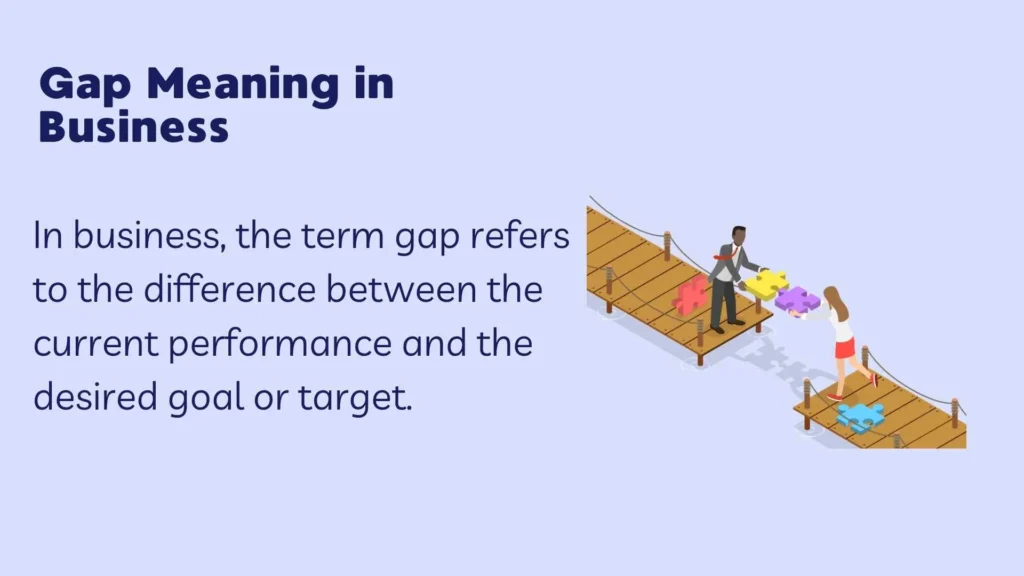
In business, the term gap refers to the difference between the current performance and the desired goal or target. Companies often perform a gap analysis to identify areas where improvements are needed. These gaps may involve sales, revenue, customer satisfaction, productivity, or market share.
For example, if a company aims to generate $500,000 in monthly sales but only earns $400,000, the $100,000 difference is known as the business gap. Organizations use this information to create better strategies, improve operations, and achieve long-term growth.
Examples
- Sales gap between target and actual revenue
- Skills gap among employees
- Market gap for untapped customer needs
- Performance gap in business operations
Related Keywords: business gap analysis, performance gap, market gap, strategy gap, organizational gap, business planning.
What Does Gap Mean in Urban Dictionary?
According to common internet slang and Urban Dictionary usage, gap can have different informal meanings depending on the context. In many online communities, especially among younger people, “to gap someone” means to beat, outrun, or leave someone far behind in a race, competition, or challenge.
For example:
- “He gapped everyone in the race.”
- “That sports car totally gapped the other vehicles.”
The slang meaning is very different from the standard dictionary definition, which simply refers to an empty space or difference between two things.
Related Keywords: gap slang, internet slang, gap someone meaning, racing slang, Gen Z slang.
Gap Meaning in Medical Terms
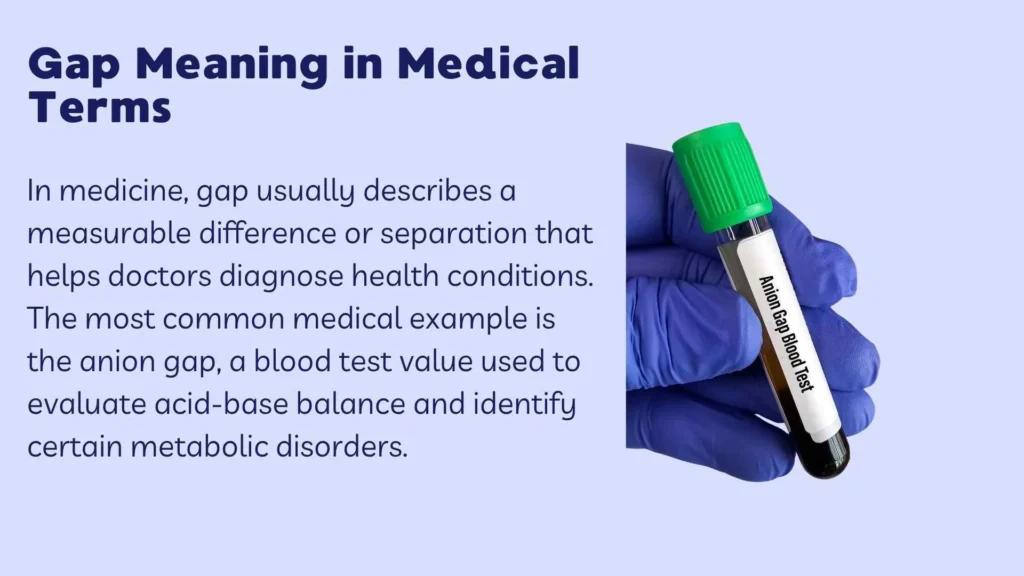
In medicine, gap usually describes a measurable difference or separation that helps doctors diagnose health conditions. The most common medical example is the anion gap, a blood test value used to evaluate acid-base balance and identify certain metabolic disorders.
Healthcare professionals may also use the word “gap” when discussing:
- Bone gaps after fractures
- Wound gaps during healing
- Treatment gaps in patient care
- Knowledge gaps in medical research
The exact meaning depends on the medical specialty and clinical context.
Related Keywords: anion gap, medical terminology, healthcare gap, treatment gap, diagnosis, metabolic disorders.
Gap Meaning in Education
In education, a gap refers to a difference in knowledge, learning progress, academic achievement, or educational opportunities. Teachers and schools identify learning gaps to help students improve specific skills or subjects.
Common educational gaps include:
- Learning gap after missing school
- Achievement gap between student groups
- Skills gap in reading or mathematics
- Knowledge gap before starting advanced courses
Closing these gaps often requires personalized instruction, tutoring, and additional learning resources.
Related Keywords: learning gap, achievement gap, education gap, knowledge gap, academic performance, student learning.
Space Gap Meaning
A space gap simply means an empty area or distance between two objects, people, words, or structures. The meaning changes slightly depending on the situation.
For example:
- In writing, a space gap is the blank space between words.
- In architecture, it refers to the physical distance between structures.
- In engineering, it may describe the clearance between machine components.
- In everyday conversation, it simply means there is extra room between two things.
The phrase is commonly used whenever physical spacing or separation is important.
Related Keywords: empty space, physical gap, spacing, distance, clearance, separation.
Gap Meaning in Accounting
In accounting and finance, gap refers to a difference between financial figures, expected results, or asset and liability positions. Businesses analyze these gaps to improve financial planning and risk management.
Some common accounting gaps include:
- Revenue gap
- Budget gap
- Cash flow gap
- Interest rate gap
- Financial reporting gap
Identifying these differences helps businesses make informed financial decisions and maintain healthy operations.
Related Keywords: accounting gap, financial gap, budget variance, cash flow gap, interest rate gap, financial analysis.
Gap Meaning in Slang Cars
Among car enthusiasts and street racing communities, gap is slang for creating a significant lead over another vehicle during a race. If one driver says they “gapped” another car, it means they accelerated faster and finished well ahead.
Example:
- “The modified Mustang gapped the Camaro on the highway.”
The expression is especially popular in drag racing, street racing videos, automotive forums, and social media discussions.
Related Keywords: car slang, racing slang, street racing, drag racing, gapped meaning, automotive slang.
Examples in Sentences
- My car completely gapped the competition.
- He got gapped by several car lengths.
- Everyone was talking about the huge gap in the race.
- That sports car easily gapped the sedan.
- The driver claimed he could gap anyone on the track.
Examples of Gap in Sentences
Here are some examples of gap in everyday sentences:
- There is a small gap between the door and the wall.
- The age gap between them is ten years.
- She took a gap year before starting college.
- The company is trying to reduce the skills gap.
- A communication gap caused confusion during the meeting.
- There is a large income gap between the two regions.
- We noticed a gap in the data report.
- The generation gap affects how people view technology.
Different Contexts of Gap
The meaning of gap changes slightly depending on context.
| Context | Meaning |
| Casual Conversation | Space or difference |
| Education | Learning deficiency |
| Business | Missing skills or opportunities |
| Relationships | Lack of communication |
| Finance | Difference in wealth or income |
| Technology | Missing knowledge or access |
| Online/Social Media | Break in activity or posting |
Origin and History of the Term
The word gap comes from Old Norse and Germanic language roots.
Historically, it referred to:
- An opening
- A breach
- A break in a wall or structure
Over time, English speakers expanded its meaning to include abstract differences such as:
- Knowledge gaps
- Generation gaps
- Income gaps
Today, the term is used worldwide in both physical and figurative ways.
Why Do People Use This Word?
People use the word gap because it quickly explains a difference, separation, or missing element.
Instead of giving a long explanation, saying “there’s a gap” instantly communicates that something is lacking or separated.
Examples:
- Gap in knowledge
- Gap in communication
- Gap in experience
The word is simple, clear, and widely understood.
Emotional & Psychological Meaning Behind This Word
Psychologically, a gap often represents distance or something missing.
Depending on context, it may create feelings such as:
Positive Feelings
- Growth opportunities
- Learning potential
- Personal development
Negative Feelings
- Disconnection
- Loneliness
- Frustration
- Inequality
For example, a communication gap in a relationship may lead to misunderstandings, while a knowledge gap can motivate learning.
Tone Explanation
The word gap is generally:
- Neutral
- Professional
- Informal when used casually
- Common in academic writing
- Common in business communication
It is not usually considered slang.
Is It Rude to Say This Word?
No.
The word gap is not rude, offensive, or inappropriate.
People use it in:
- Schools
- Workplaces
- Research papers
- Social media
- Daily conversations
However, discussions about income gaps, gender gaps, or social gaps may involve sensitive topics, depending on the context.
Is This Word Positive, Negative, or Neutral?
The word gap is generally neutral.
Its emotional impact depends on the situation.
| Situation | Tone |
| Gap in opportunities | Negative |
| Gap in learning | Neutral |
| Gap year for travel | Positive |
| Communication gap | Negative |
| Skill gap improvement | Positive |
When to Use Gap
Use the word gap when discussing:
- Differences
- Spaces
- Missing elements
- Breaks in time
- Skill levels
- Communication issues
Examples:
- Knowledge gap
- Income gap
- Time gap
- Generation gap
When NOT to Use Gap
Avoid using gap when there is no actual separation or difference.
For example:
❌ The gap of happiness is large.
✅ The difference in happiness is large.
Some situations require more specific words such as:
- Difference
- Distance
- Break
- Separation
- Interval
Situations Where You Should Avoid Using This Word
Avoid using gap when:
- A more precise term exists
- Technical language is required
- The audience may misunderstand the meaning
For example, scientists may prefer specific terms like “variance” or “disparity” instead of gap.
Gap vs Similar Terms
| Term | Meaning | Usage | Key Difference |
| Gap | Space or difference | General use | Broadest meaning |
| Difference | Variation between things | Comparison | Focuses on contrast |
| Distance | Physical separation | Travel and location | Usually physical |
| Break | Pause or interruption | Time/activity | Focuses on stopping |
| Separation | State of being apart | Relationships or objects | Stronger division |
Variations and Related Meanings of Gap
Here are common variations of the keyword:
1. Age Gap
Difference in age between people.
2. Generation Gap
Difference in attitudes between generations.
3. Skill Gap
Difference between required and existing skills.
4. Knowledge Gap
Missing information or understanding.
5. Income Gap
Difference in earnings.
6. Wealth Gap
Difference in accumulated assets.
7. Communication Gap
Failure to share information effectively.
8. Gap Year
A break before higher education or employment.
9. Opportunity Gap
Unequal access to resources.
10. Achievement Gap
Difference in academic performance.
How to Respond When Someone Mentions a Gap
Casual Replies
- That makes sense.
- I understand the difference now.
- Let’s work on closing that gap.
Funny Replies
- That’s a gap bigger than my weekend plans!
- We need a bridge for that gap!
- That’s quite a distance to cover.
Professional or Mature Replies
- Thank you for identifying that gap.
- We should develop a strategy to address it.
- Let’s find ways to reduce the gap.
USA / Western Usage
In the United States and other Western countries, gap is commonly used in:
- Education
- Business
- Economics
- Social discussions
Examples include:
- Gender gap
- Wage gap
- Skills gap
- Generation gap
Americans frequently use the term in news reports, workplaces, and schools.
Global and Internet Usage Differences
Globally, the word keeps a similar meaning.
Online, however, people often use gap to refer to:
- A break from social media
- A posting gap
- A communication gap
- Differences between creators or communities
The internet has expanded the term into many modern contexts.
What Does Gap Mean in Text?
In texting, gap usually means:
- A delay
- A break
- Missing communication
- A period of inactivity
Example:
“Sorry for the long gap between replies.”
This means the person took a long time to respond.
What Does Gap Mean on TikTok and Instagram?
On TikTok and Instagram, gap often refers to:
- Skill differences
- Content quality differences
- Age differences
- Posting breaks
Example:
“The editing gap between these creators is huge.”
This means one creator’s editing skills are much stronger than another’s.
Is It Rude to Say Gap?
No.
Gap is considered a neutral and respectful word in most situations.
It is commonly used in professional, academic, and casual conversations.
Why Do People Use Gap?
People use gap because it:
- Clearly explains differences
- Is easy to understand
- Works in many situations
- Sounds professional and natural
It is one of the most versatile words in English.
FAQs
What is the basic meaning of gap?
A gap is an empty space, opening, or difference between two things. It can refer to physical distance, missing information, performance differences, or time intervals.
Does gap always mean physical space?
No. Depending on the context, gap can describe differences in business, education, finance, healthcare, technology, or relationships.
Is “gap” a slang word?
Yes. In modern slang, especially in racing and online communities, “gap” or “gapped” often means defeating or leaving someone far behind in a competition.
Conclusion
So, what does gap mean? A gap is a space, difference, separation, or break between two things. It can refer to physical distance, missing information, differences in age or income, a break in communication, or even a period of time away from work or social media.
Because of its flexibility, the word is used in everyday conversations, education, business, relationships, technology, and online platforms like TikTok and Instagram. Understanding the meaning of gap helps you communicate more clearly and recognize how differences, spaces, and opportunities shape everyday life.
Also Check These Posts